


TXLET delivers advanced crane solutions designed for global industries that demand safety, precision, and durability. From explosion-proof systems for hazardous zones to high-capacity gantry cranes for ports and shipyards, every product integrates cutting-edge engineering, strict international certifications, and sustainable technologies such as regenerative braking. With proven expertise in hoisting, braking, and structural integrity, TXLET ensures long-term reliability and compliance across diverse markets worldwide.
In today’s global manufacturing and logistics landscape, a crane is no longer seen as a simple lifting device but as a strategic Integrated Handling System. Modern industries demand solutions that combine strength, precision, and intelligence, ensuring both productivity and long-term sustainability.
Driven by urbanization, renewable energy projects, and rapid infrastructure growth, the global crane market is expected to expand steadily toward 2030. Businesses now seek not just equipment, but trusted partners capable of delivering engineered systems that comply with international standards while adapting to demanding operating environments.
TXLET Crane has positioned itself at the forefront of this shift. By embedding safety, efficiency, and digital innovation into every solution, TXLET ensures reliable performance across five continents—from steel and aerospace to shipbuilding and port logistics.
This report examines the high-duty crane systems preferred by TXLET’s global clients, highlighting the engineering expertise, compliance, and technological advancements that define our leadership in addressing today’s most challenging lifting challenges.
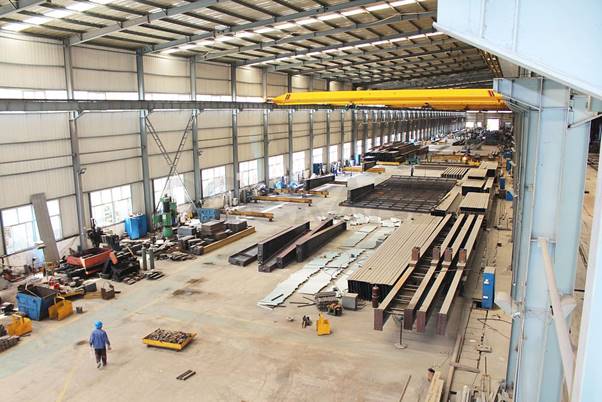
The Double Girder Overhead Crane (Bridge Crane) remains the most strategically vital piece of equipment in enclosed manufacturing environments. Its inherent structural rigidity allows it to handle massive lifting capacities (up to 500+ tons) and withstand the extreme cyclic stress associated with high-frequency, continuous operations. Beyond raw strength, these cranes represent a balance of precision engineering, safety assurance, and lifecycle efficiency, making them indispensable for industries where downtime or error can translate into millions in losses.
In facilities across the Middle East and Southeast Asia, TXLET’s deployments are classified under the rigorous FEM 4m to 5m (A7/A8) duty cycles. These Process Cranes are equipped with lamination hooks (safety factor > 10), designed specifically for ladles carrying molten metal at extreme temperatures. The critical design feature here is thermal shielding (IP66) for all motors and electrics, coupled with redundant triple-braking systems on all motion axes (hoist, trolley, and bridge). This ensures absolute load security even under catastrophic power failure—non-negotiable when handling dangerous, high-value materials.
In specialized plants in Europe and North America, our double girder cranes facilitate the assembly of large aerospace structures and wind turbine components. Here, the emphasis shifts from brute force to ultra-precision. Cranes are integrated with Laser Positioning Systems (LPS) and sophisticated Anti-Sway algorithms that use acceleration sensors and PLC feedback loops to dampen load oscillations within milliseconds. This allows for component placement accuracy down to < 1 mm over spans exceeding 30 meters—a technical feat that is crucial for fit-up validation in mission-critical industries.
Our Box Girder construction is often favored in heavy-duty applications. Unlike I-beam girders, the box design offers higher torsional resistance and enables the secure placement of full-length maintenance access platforms within the girder structure. This innovation increases the safety and accessibility of high-level inspection and repair jobs, extending crane life and reducing maintenance downtime.
Beyond technical robustness, double-girder overhead cranes deliver measurable return on investment (ROI) for global industries. Higher duty ratings translate to longer Mean Time Between Failures (MTBF), reducing costly unplanned downtime. The integration of frequency-controlled drives and regenerative braking systems further lowers energy consumption, while digital monitoring platforms provide predictive maintenance alerts before failures occur. For clients, this combination means greater uptime, reduced operational costs, and safer workplaces—all critical factors in highly competitive markets.

Gantry Cranes are defined by their independence from existing building structures, making them the primary solution for all large-scale outdoor, intermodal, and dockside operations. Unlike overhead cranes confined to factory spaces, gantry cranes dominate ports, shipyards, and open industrial yards, where flexibility and structural autonomy are critical. TXLET’s deployments are engineered to withstand extreme environmental variables, including high wind loads, corrosive salt spray, and seismic activity—ensuring safe and reliable operations in some of the world’s most demanding coastal and industrial regions.
At new port expansions and container terminals, the choice between Rubber-Tyred Gantry (RTG) and Rail-Mounted Gantry (RMG) systems is strategic. TXLET's latest RMG systems utilize advanced skew control and independent motor control on all wheels to prevent crabbing and minimize rail wear. This ensures high travel speeds (up to 180 m/min) with lower maintenance costs. Meanwhile, our RTGs feature load-sensing steering systems for optimal maneuverability between container stacks, allowing terminals to maximize yard density and achieve higher Transaction Throughput (TTP) rates. These innovations directly contribute to faster ship turnaround times and improved global supply chain efficiency.
Our Shipyard Gantry Cranes represent true technological marvels. With spans exceeding 150 meters and lifting capacities surpassing 1,500 tons, they are indispensable for the assembly of supertankers, offshore oil platforms, and next-generation cruise ships. Equipped with Synchronous Hoisting Technology, multiple hoists are centrally controlled by a master PLC to ensure the load remains perfectly level across all lifting points. This eliminates torsional stress and structural deformation when maneuvering massive ship blocks or offshore modules, guaranteeing structural integrity and precision handling in billion-dollar shipbuilding projects.
TXLET gantry cranes are built for longevity under harsh conditions. All outdoor structural components receive a multi-layer protective coating system (ISO 12944 C5-M standard) designed for highly corrosive marine and industrial atmospheres. Combined with sealed bearing housings, aluminum cabling, and anti-condensation climate controls, these design characteristics ensure a service life exceeding 30 years with minimal structural degradation, even in salt-rich environments.
Gantry cranes contribute directly to national logistics capacity. By increasing container yard density, reducing vessel turnaround time, and minimizing unplanned downtime, they strengthen a country’s competitive edge in global trade. For shipyards, the ability to handle 1,000+ ton modules safely and efficiently translates into shorter construction cycles and reduced overall project costs. TXLET further enhances economic performance through predictive maintenance systems that monitor motor temperature, gearbox vibration, and hoist rope wear in real time—extending service intervals and reducing total lifecycle costs.

The international market frequently requires cranes with highly specific features that address environmental, health, and safety (EHS) regulations. TXLET’s proven success in these niches underscores our commitment to global compliance and operational integrity, ensuring that every project meets the strictest international standards while delivering measurable value to end users.
In the chemical, petrochemical, and pharmaceutical sectors across the Middle East and Europe, safety is paramount. TXLET designs and delivers cranes certified to ATEX and IECEx standards, with Ex-d (flameproof) or Ex-e (increased safety) enclosures for all electrical components, including motors, control boxes, and limit switches. Non-sparking materials—such as bronze alloy wheels, insulated rail interfaces, and anti-static coatings—are specified to eliminate ignition risks in Zone 1 and Zone 2 hazardous areas. These solutions enable continuous operations under strict refinery and plant audits, minimizing downtime from regulatory inspections and ensuring compliance with global occupational safety mandates.
Hydropower projects require cranes that may remain idle for years yet must perform flawlessly in emergencies. TXLET dam and turbine cranes are engineered with overdesign load factors of up to 125%, ensuring resilience during emergency spillway operations or heavy turbine maintenance. To guarantee reliability, we integrate redundant locking mechanisms, real-time corrosion monitoring, and sealed lubrication systems. These cranes are critical national assets; their failure is not an option, as they safeguard downstream communities and energy production security. Our solutions have been deployed in large-scale dam projects across Asia and South America, setting new standards for hydropower reliability.
For residential-adjacent factories, automotive production lines, and urban logistics hubs, TXLET specializes in low-noise crane engineering. Core features include helical gearboxes to reduce vibration, acoustic dampening covers around winches and trolleys, and advanced Regenerative Braking Systems. Unlike traditional resistive braking, regenerative systems capture kinetic energy during deceleration and feed it back into the facility’s electrical grid. Clients report 15–20% verified energy savings, cutting operational costs while improving their Environmental, Social, and Governance (ESG) performance ratings. This aligns with modern corporate strategies for carbon reduction, green factory certification, and sustainable infrastructure development.
These specialized crane systems represent more than technical adaptations—they are mission-critical enablers for industries under strict regulatory scrutiny. Whether preventing sparks in explosive environments, guaranteeing operational readiness after decades of dormancy, or delivering silent, energy-positive lifting in urban areas, TXLET provides solutions that combine engineering precision, compliance, and sustainability. This makes our cranes an integral part of both industrial growth and community safety worldwide.

The performance of a crane is never incidental—it is the direct reflection of its underlying component quality, the rigor of its design process, and strict adherence to global safety protocols. At TXLET, every subsystem is engineered with precision to maximize longevity, reliability, and operational safety, ensuring our cranes deliver consistent performance under the world’s most demanding conditions.
The heart of any crane lies in its hoisting system. TXLET employs Frequency-Controlled Wire Rope Hoists engineered for both heavy-duty and precision applications. The wire rope drum (tang cuốn) is meticulously grooved to maintain a perfect helix, preventing rope overlap and extending rope service life. Our gearboxes use a modular, enclosed design with hardened, precision-ground helical gears submerged in oil baths, offering maximum efficiency, extended life, and near-zero backlash. This level of engineering is vital for precise load spotting, whether positioning a ladle of molten steel or aligning a turbine rotor during assembly.
In lifting technology, braking is not merely a safety feature—it is a mission-critical fail-safe. TXLET equips every motion axis (hoist, trolley, bridge) with electromagnetic disc brakes, sized at 1.8x the motor’s full-load torque capacity. This ensures that even in the unlikely event of a drive coupling failure, the load remains fully secured. For critical processes, a secondary hydraulic brake is integrated as an emergency redundancy, reflecting our philosophy of zero-compromise safety engineering.
The crane’s skeleton—its girders, end trucks, and connections—is subject to enormous stresses over decades of operation. TXLET adheres to the strictest global standards, such as AWS D1.1 (American Welding Society) and EN ISO 15614 for welding. Every primary load-bearing weld undergoes non-destructive testing (NDT), including Ultrasonic Testing (UT) and Magnetic Particle Inspection (MPI). These inspections guarantee zero hidden defects in high-stress areas, delivering structural integrity that inspires confidence across decades of continuous duty.
To ensure smooth cross-border acceptance and seamless commissioning, TXLET cranes are manufactured in compliance with multiple overlapping international standards, including but not limited to:
ASME B30.2 (USA/Canada): Governing overhead and gantry crane design and operation.
EN 15011 (European Union): Detailing design principles and manufacturing requirements for bridge and gantry cranes.
Local Market Regulations: Covering technical safety codes and inspection protocols for specific geographies, including Vietnamese QCVN standards and other Southeast Asian regulatory frameworks.
This multi-standard compliance strategy eliminates regulatory roadblocks and ensures TXLET systems are ready for immediate approval, certification, and operation across global markets.
By combining advanced component engineering with strict compliance, TXLET cranes reduce lifecycle costs, minimize unplanned downtime, and offer global interoperability. For industries under regulatory scrutiny—steel, aerospace, hydropower, petrochemicals—this translates directly into operational continuity, reduced insurance risks, and higher ROI.

TXLET Crane has established itself as a reliable, high-technology partner by focusing on the total economic picture for our clients—not just the initial purchasing price.
Economic Justification and Return on Investment (ROI)
The higher initial investment in a TXLET crane is quickly recouped through several quantifiable factors:
Reduced Maintenance Costs: High-duty-rated components (FEM A7/A8) result in longer Mean Time Between Failures (MTBF), leading to fewer breakdowns and lower replacement part costs throughout the crane's lifespan.
Energy Efficiency: The use of VFDs and regenerative braking dramatically lowers operational electricity consumption.
Increased Throughput: Smart features like APS and Anti-Sway shorten cycle times, directly increasing production volume or terminal throughput.
By providing smart, compliant, and durable lifting systems integrated with Industry 4.0 technology, TXLET Crane not only solves today's complex lifting challenges but also future-proofs our clients' industrial infrastructure against rising demands. Our commitment to quality and technical excellence remains the clearest testament to our leadership in the global marketplace.
Add: Crane Park, Xinxiang City, Henan Province, China
CEO. MENG QI HAN: Tel: +86-373-5288220
Email: txlet@hotmail.com
Henan office - China: Crane Park, Xinxiang City, Henan Province, China
Import and Export Manager Asia: Ms. Any Tam
Email: txlet@hotmail.com / Mobile: (+84)983 848 328 / Wechat: tkpanda06 / Zalo: (+84)983 848 328
Hanoi office - Vietnam: No 16, Nhan Hoa Alley, Hai Boi Street, Vinh Thanh Commune, Hanoi City, Vietnam
© 2009-2025 by TXLET