


This case study highlights TXLET’s implementation of advanced hoisting and crane systems for a major seaport in Southeast Asia. Operating in a harsh marine environment with high humidity, salt corrosion, and continuous 24/7 loading demands, the project required exceptional durability, precision, and reliability. TXLET delivered a complete electromechanical solution featuring corrosion-resistant structures, dual inverter control, and intelligent hydraulic grab systems. These innovations ensured stable performance, enhanced safety, and significant energy savings. The result is a more efficient, sustainable port operation that strengthens the client’s position in regional logistics and bulk material handling.
In the 21st century, the Global Supply Chain is not merely a logistical system but the very lifeline regulating the world economy. The maritime, port, and shipbuilding industries act as the core arteries where millions of tons of cargo—from raw materials to refined products—are constantly in motion. The strong growth of international trade, coupled with the trend of Ship Gigantism and the necessary energy transition (developing LNG vessels, FPSOs), has placed an absolute demand on hoisting systems.
Hoisting equipment must not only be powerful but also precise, reliable, and, critically, resilient against the most challenging working environments. Salt spray, high winds, extreme humidity, and continuous, heavy-duty operations in commercial ports, bulk handling terminals, and shipyards require zero compromise on quality. This is the foundation upon which TXLET stands—a hoisting technology company that is redefining engineering standards in the heavy industry and maritime sectors worldwide.
With experience accumulated from projects across Asia, the Middle East, and Europe, TXLET delivers more than just cranes or gantry systems; we provide a Total Hoisting Solution. Our mission is to transform environmental adversity into a competitive edge through optimally customized systems, ranging from specialized four-rope grab cranes for bulk handling to ultra-heavy-duty Ship-Building Gantry Cranes for hull assembly, and finely tuned electro-hydraulic solutions for ship repair facilities.
TXLET’s core philosophy is “Durability in Harsh Environments, Precision in Every Movement.” This commitment ensures stable performance, energy efficiency, and operational optimization, helping our clients solidify their leading position in the international logistics network.

The ability to adapt to unique and demanding working conditions is a vital criterion for any global hoisting partner. The client in this case study is a leading logistics and bulk material handling conglomerate in Southeast Asia, managing a major port facility with an annual throughput exceeding 15 million tons. Strategically positioned along a critical maritime trade route, this port serves as a key logistics hub connecting domestic and international supply chains for coal, iron ore, and construction aggregates.
In planning a large-scale port expansion, the client faced a complex matrix of technical and operational challenges that conventional equipment suppliers were unable to fully address. These challenges were not only mechanical but also deeply environmental and systemic, demanding a partner capable of engineering for endurance, precision, and reliability in one of the harshest industrial settings.
The marine atmosphere introduces high concentrations of salt spray and chloride ions, which rapidly accelerate oxidation and corrosion of steel structures, wire ropes, and electrical terminals. To ensure long-term durability, all components require advanced anti-corrosion engineering, including multi-layer epoxy-zinc coating, specialized marine-grade paints, and stainless-steel fasteners designed for coastal conditions.

Operating temperatures exceeding 40°C, coupled with near 100% relative humidity, impose significant strain on motor cooling systems, control panels, and insulation materials. These conditions necessitate electrical systems with enhanced thermal management and minimum IP65 protection, ensuring reliability under both direct sunlight and high-moisture exposure.
In dynamic port regions subject to tropical monsoons and seismic activity, structural resilience becomes a non-negotiable requirement. Crane girders, runways, and hoisting assemblies must be constructed to withstand high wind pressures and ground vibrations, with finite element analysis (FEA) and wind tunnel validation included in the design phase to assure long-term structural stability.
Bulk material handling cranes and grab systems operate in near continuous cycles—24 hours a day, seven days a week. Each grab averages 25–50 tons per cycle, performing thousands of lifting operations daily. Under such demanding schedules, every mechanical component—gearboxes, brake units, bearings, and wire ropes—must be designed to a higher FEM classification and longer mechanical life, ensuring both uptime and safety.
Operations in open-air environments, often under unpredictable weather or strong sea winds, require intelligent anti-sway, anti-tilt, and load-balancing control systems. These systems maintain structural stability and operator safety, even under off-center or dynamic loading conditions, effectively reducing fatigue stress and extending the equipment’s lifespan.
In large-scale bulk handling, control precision directly defines operational efficiency. Smooth acceleration, stable deceleration, and precise grab control determine not only the volume of material per lift but also the cleanliness and accuracy of each discharge. To prevent material spillage and excessive dust generation, the hoisting system must maintain load deviation near zero and coordinate perfectly between the lifting, trolley, and grab mechanisms.
Achieving such precision requires a combination of sophisticated inverter synchronization, closed-loop feedback control, and smart braking technology, all calibrated to maintain smooth, vibration-free operation even under heavy dynamic loads.
To meet the rigorous dual requirements of extreme environmental durability and near-absolute operational precision, TXLET’s senior engineering team developed a comprehensive, customized crane solution integrating cutting-edge mechanical, electrical, and hydraulic technologies.
TXLET’s technical solution is fundamentally built upon the principle of Dual Inverter Control. This represents a breakthrough in heavy industry hoisting technology, enabling:
Two or more winch mechanisms (e.g., the hoisting winch and the grab opening/closing winch) operate in perfect parallel through advanced vector control algorithms. This eliminates nearly all speed or position discrepancies, ensuring that the heavy load (25-50 tons) is perfectly balanced throughout the lifting, traversing, and lowering process.
Operators gain precise control over the speed of descent and the opening/closing of the grab, optimizing the loading process and significantly reducing mechanical impact on the grab and the material.
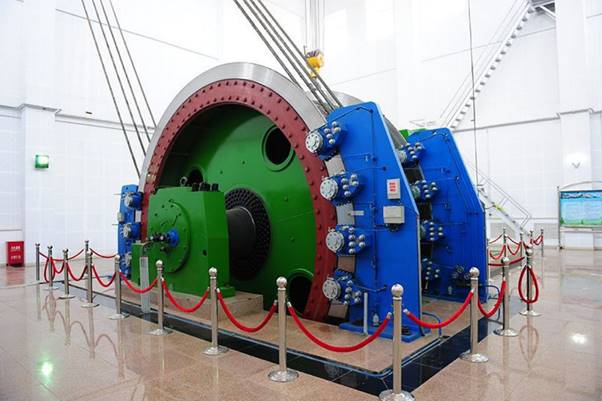
The main structure (main girder and hoisting mechanism) is fabricated from high-strength alloy steel (Q345B/Q355B), offering superior load capacity and fatigue resistance. All structures undergo full heat treatment to enhance ductility and are meticulously inspected using Non-Destructive Testing (NDT) before protective coating.
A specialized multi-layer Epoxy coating system is applied, rated for the C5-M (Marine/Very High Severity) environment. This rigorous protection ensures excellent anti-corrosion capability for a design life of at least 10–15 years.
The crane solution features a quick-assembly modular design, optimizing transportation and, critically, drastically reducing on-site erection time—an essential factor when the port must remain fully operational during the upgrade phase.
TXLET incorporates a Remote Monitoring System (RMS), connected via an advanced industrial IoT platform. This system collects and analyzes real-time data on:
Based on this data, clients can transition from scheduled maintenance to Predictive Maintenance (PdM), proactively identifying potential failure points. This strategy can reduce up to 80% of unscheduled downtime costs and significantly enhance equipment management efficiency.
The entire process—from manufacturing and installation to final commissioning—adheres strictly to ISO 9001 quality management and CE (European Conformity) safety standards. The TXLET engineering team conducts rigorous static and dynamic load testing on-site, ensuring the system achieves the Heavy Duty Class safety level before official handover.
Upon completion and operational testing under real-world, 24/7 conditions, the TXLET crane system achieved performance metrics that surpassed the initial technical requirements, affirming the investment value and technological superiority.
Official operational reports from the client confirmed significant improvements:
The equipment reduced the average lifting cycle time by over 25% due to the stable speed and precision of the dual inverter system, allowing operators to work faster and with greater confidence.
The advanced inverter system, paired with high-efficiency motors, resulted in approximately 15% less power consumption compared to the conventional cranes previously used. This directly contributes to lower Operating Expenses (OPEX) and a reduced carbon footprint for the port.
Load deviation during continuous heavy operation was verified to be near-zero, protecting the main girder structure and extending the lifespan of the entire system.
Feedback from the on-site technical team confirms the system's longevity: the equipment has operated stably with virtually no major faults in the 12 months since commissioning. The quiet operation, ease of maintenance, and exceptional durability during high-intensity shifts were particularly praised.
A technical representative for the logistics group shared:
“The TXLET solution didn't just save us on operational costs and increase our handling speed; more importantly, it delivered absolute peace of mind during production. The fine-tuning capability of the dual inverter system allowed us to achieve a level of precision that was previously unattainable with traditional mechanical systems. The dedication and deep understanding of our practical needs demonstrated by the TXLET team have solidified them as a technology partner, not just an equipment supplier.”
The success in Southeast Asia is a clear testament to TXLET's engineering philosophy, a capability that has been repeatedly validated in other projects globally:
Middle East (UAE): Providing ultra-heavy-duty overhead cranes for the assembly of Floating Production, Storage, and Offloading (FPSO) vessel modules, demanding the highest precision for lifting multi-hundred-ton structural components.
Europe (The Netherlands): Designing and installing Automated Gantry Cranes for container terminals, integrated with AI and anti-sway technology, aligning with the trend of Smart Ports.
Renewable Energy (Vietnam/Germany): Supplying specialized cranes for wind turbine manufacturing and tower assembly, solving the challenge of safely lifting and maneuvering long, heavy components.
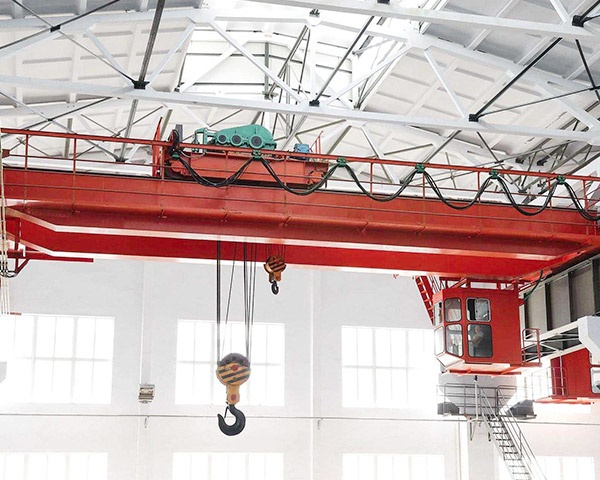
TXLET’s reliability stems not only from its exceptional mechanical engineering but also from its unwavering commitment to safety, sustainability, and long-term industrial responsibility. Every solution developed by TXLET reflects a philosophy that balances technological advancement with environmental awareness and human-centered design.
All TXLET hoisting and crane systems meet the world's most stringent safety and performance standards, including CE, ISO, and FEM certifications, ensuring that each piece of equipment provides not only operating efficiency but also peace of mind for both end users and operators.
To reinforce this commitment, TXLET integrates several advanced protective and energy-saving systems into its engineering architecture:
Each crane and hoisting mechanism is equipped with dual independent overload safeguards, including both electronic load sensors and mechanical limiting devices. When the load approaches the maximum threshold, the system automatically triggers an alert or halts operation, preventing structural stress, mechanical damage, or potential risk to the port infrastructure.
TXLET implements self-adjusting electromagnetic and hydraulic braking units, which ensure instantaneous response under both emergency and precision operation scenarios. These brakes feature real-time wear compensation and redundant safety logic, providing reliable stopping performance even in high-humidity or corrosive marine environments.
On large-scale cranes and continuous lifting systems, TXLET’s inverter modules include regenerative braking technology—recovering kinetic energy generated during load lowering and feeding it back into the facility’s power grid. This innovation not only reduces overall energy consumption but also supports sustainable, low-carbon port operations, aligning with global trends toward green logistics and cleaner industrial processes.
Beyond technology, TXLET’s philosophy is guided by a forward-looking vision: to become a driving force in responsible industrial transformation, where every piece of lifting equipment contributes to a safer workplace and a more sustainable future.
By continuously investing in R&D and embracing smart technologies such as IoT-based condition monitoring and predictive maintenance, TXLET ensures that its cranes are not only efficient today but also prepared for the evolving demands of tomorrow’s industrial world.
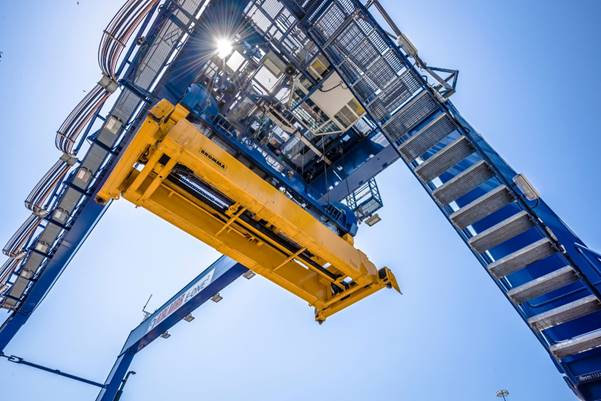
Every project undertaken by TXLET reaffirms our global capability in design, manufacturing, and deployment. From the arid desert climates of the Middle East and the humid, storm-prone conditions of Asia, to the stringent regulatory standards of Europe, TXLET has demonstrated superior technological adaptability.
The success of this bulk logistics project once again validates TXLET’s enduring philosophy: to grow alongside our customers, adapt to all conditions, and continuously raise the benchmark for global industrial standards.
TXLET delivers more than just hoisting equipment; we provide an unwavering commitment to quality, safety, and trust, partnering with hundreds of organizations worldwide to ensure the smooth, efficient, and reliable operation of the global logistics network in the new era.
Add: Crane Park, Xinxiang City, Henan Province, China
CEO. MENG QI HAN: Tel: +86-373-5288220
Email: txlet@hotmail.com
Henan office - China: Crane Park, Xinxiang City, Henan Province, China
Import and Export Manager Asia: Ms. Any Tam
Email: txlet@hotmail.com / Mobile: (+84)983 848 328 / Wechat: tkpanda06 / Zalo: (+84)983 848 328
Hanoi office - Vietnam: No 16, Nhan Hoa Alley, Hai Boi Street, Vinh Thanh Commune, Hanoi City, Vietnam
© 2009-2025 by TXLET