


This article explores how Energy Storage Systems (ESS) and Hybrid Power Systems are transforming the lifting equipment industry. By integrating renewable sources like solar and wind with advanced storage technology, cranes and hoists achieve higher efficiency, lower emissions, and stable operations. Global case studies highlight reduced costs and improved reliability, positioning these green innovations as the future of sustainable industrial lifting.
In a global landscape defined by the urgency of climate change, the volatility of fossil fuel markets, and the tightening grip of environmental regulations, the industrial sector stands at a pivotal crossroads. For modern enterprises, profitability is no longer the sole metric of success; sustainability and a minimized environmental footprint have evolved into strategic imperatives. This fundamental shift toward green energy is not merely a trend—it's a global mandate. At the heart of this transformation, two groundbreaking technologies are poised to redefine the future of lifting equipment: Energy Storage Systems (ESS) and Hybrid Power Systems. These innovative solutions are not only catalysts for enhanced operational efficiency but are also instrumental in slashing costs and mitigating environmental impact, forging a clear and sustainable path for the industry.
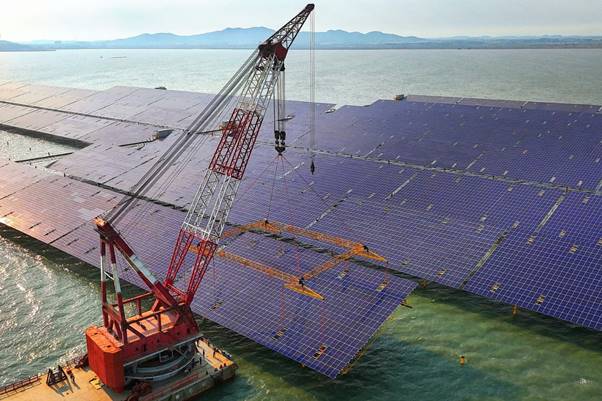
Imagine a factory that operates with unwavering reliability, completely insulated from the disruptive effects of power interruptions or grid fluctuations. This is the tangible promise of modern Energy Storage Systems. Departing from the limitations of legacy lead-acid batteries, today's industrial-grade batteries—including advanced lithium-ion (Li-ion), high-capacity flow batteries, and next-generation solid-state batteries—are engineered to meet the rigorous demands of heavy loads and prolonged duty cycles. They function as a sophisticated "power bank" for industrial operations, methodically storing surplus energy from the grid during low-cost, off-peak hours and seamlessly dispatching it to power-hungry equipment during peak demand periods or unforeseen outages.
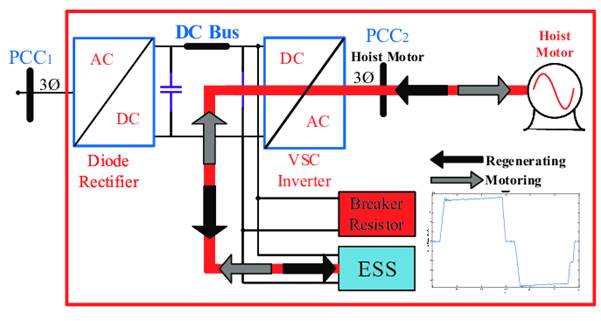
The integration of ESS offers a compelling suite of benefits, both financial and operational:
ESS enables companies to master a strategic "buy low, use high" approach to energy management. By leveraging the lowest electricity rates during non-business hours (typically from 10 PM to 4 AM) to charge the batteries, businesses can power their most demanding equipment with stored, inexpensive energy during peak hours when utility rates skyrocket. This strategic energy arbitrage can lead to substantial savings. According to a landmark study by the National Renewable Energy Laboratory (NREL), a properly sized ESS can cut peak-hour electricity costs by an astonishing 30–40%, translating into a robust and tangible financial return.
The sensitive control systems and powerful motors within cranes, hoists, and conveyors are highly susceptible to damage from voltage sags, spikes, and frequency variations. An ESS acts as a critical buffer, delivering a pristine, regulated power supply that smooths out grid anomalies. This consistent, "clean" power significantly reduces electrical and mechanical stress on components, which can extend the equipment's operational lifespan by 15–20% and drastically lower the frequency and cost of maintenance and repairs.
In automated production environments, a single power interruption can halt an entire assembly line, leading to significant financial losses from lost production and wasted materials. ESS provides a robust, seamless backup power source, guaranteeing continuous operation and eliminating the costly specter of downtime. This uninterrupted workflow enhances overall productivity and reinforces operational resilience.
By facilitating the use of energy from cleaner sources, ESS directly reduces a facility's reliance on fossil fuels. This contributes to a smaller carbon footprint and helps companies comply with increasingly stringent environmental regulations, showcasing a commitment to sustainability that resonates with stakeholders and consumers.
The newest generation of ESS goes beyond simple energy storage. They are integrated with sophisticated Energy Management Systems (EMS) and predictive analytics. These intelligent platforms can forecast a facility's energy needs based on production schedules, weather patterns, and historical data. They automatically adjust charging and discharging cycles to maximize savings and provide real-time alerts on system performance, ensuring unparalleled reliability and efficiency.
Lithium-Ion (Li-ion): High energy density, 6,000–8,000 charge cycles, low maintenance—ideal for 24/7 factories.
Flow Batteries: Flexible capacity by scaling electrolyte volume; excellent for deep-discharge applications such as port cranes.
Solid-State Batteries: Solid electrolytes with exceptional safety and long-term potential, expected to become an industry standard within the next decade.
Choosing the right ESS depends on each facility’s load profile and duty cycle. For example, a high-demand container terminal might favor flow batteries for their endurance and rapid discharge capabilities.
Modern ESS can connect directly to overhead cranes, electric wire rope hoists, or automated guided vehicles (AGVs). This ensures smooth motor start-ups, reduces inrush currents, and provides ultra-fast charging stations for mobile equipment—all while maintaining a stable power supply for critical lifting operations.
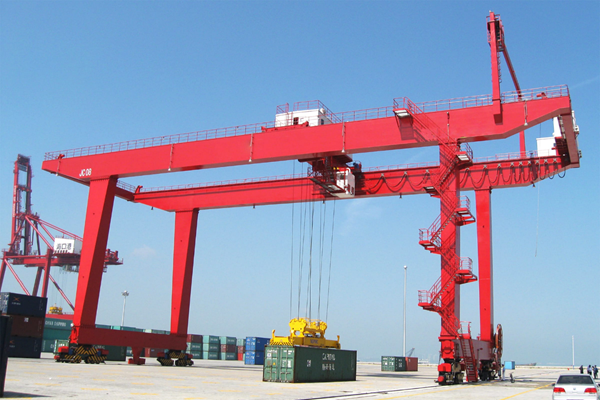
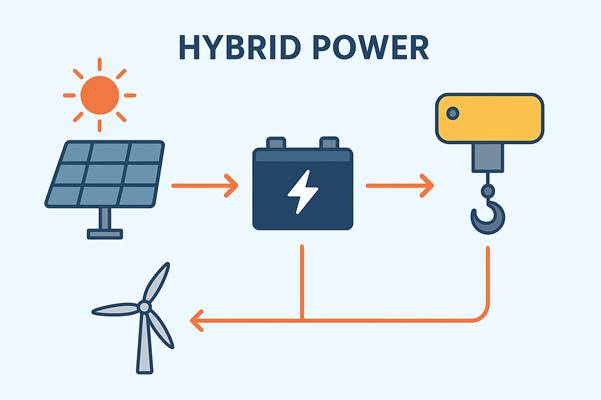
While ESS provides the stability of a fortress, Hybrid Power Systems offer the dynamic versatility of a special forces unit, combining multiple energy sources for unmatched flexibility and resilience. This integrated approach typically includes solar photovoltaic (PV) panels, wind turbines, and battery storage, all managed by a central control system that intelligently dispatches power based on real-time availability and demand.
The distinct advantages of a hybrid power solution are multifaceted and impactful:
A well-designed hybrid system is a master of resource management. Its control system dynamically selects the most efficient and available energy source at any given moment. For example, during a sunny day, the system will prioritize electricity from the solar panels. When the sun sets or on a cloudy day, it automatically transitions to stored battery energy or, if necessary, draws power from the grid. This intelligent switching ensures continuous operation while maximizing the utilization of clean, renewable energy.
For facilities in remote locations or for mobile heavy equipment that relies on diesel generators, hybrid systems offer a revolutionary alternative. They can significantly reduce or even eliminate the use of diesel fuel, directly addressing one of the biggest sources of pollution and operational expense. A recent analysis by the International Renewable Energy Agency (IRENA) found that hybrid systems can slash a facility's carbon emissions by up to 80% compared to a diesel-only setup, leading to cleaner air and a healthier work environment.
The Port of Rotterdam, one of the world’s busiest ports, serves as a powerful testament to the effectiveness of hybrid power. The port's management has implemented a comprehensive strategy to electrify its fleet of port cranes and container-handling equipment by integrating massive battery storage with renewable energy sources. This initiative has yielded remarkable results, reducing fuel costs and emissions by over 70% while simultaneously boosting operational efficiency and system reliability.
Hybrid power solutions are remarkably scalable. They can be tailored to meet the energy needs of a single electric forklift, a small-to-medium-sized warehouse, or an entire sprawling industrial complex. This adaptability allows businesses to transition to green energy incrementally, starting with a pilot project and then scaling up to a full-scale deployment without major disruptions to operations.
The decision to adopt ESS and Hybrid Power is not merely a technological upgrade; it is a strategic business decision that delivers value across multiple critical dimensions:
Beyond the immediate savings on electricity bills through optimized usage, the long-term economic advantages are compelling. Lower maintenance costs, a prolonged equipment lifespan, and improved labor productivity due to fewer production interruptions all contribute to a powerful return on investment. Many industrial facilities report achieving a full ROI within 3–5 years, depending on the scale and energy consumption profile.
This is a core driver for modern companies. A significant reduction in carbon emissions and a notable decrease in air and noise pollution contribute to a more sustainable operation. This not only ensures compliance with increasingly stringent environmental regulations but also enhances a company’s public image and credibility as a responsible and "green" supplier.
The smooth and reliable operation of lifting equipment directly translates to increased safety for workers and enhanced protection for goods. The integration with sophisticated Energy Management Systems (EMS) provides management with unparalleled visibility into energy consumption, allowing for data-driven decisions that continually optimize efficiency and productivity.
Next-generation systems integrate artificial intelligence and Internet of Things (IoT) sensors to analyze real-time data from cranes, motors, and environmental conditions. AI algorithms forecast electricity prices and weather patterns to optimize charging schedules, while predictive maintenance reduces downtime by up to 25%.
Government incentives are accelerating adoption. The European Union’s Fit for 55 initiative offers 20–30% tax credits for ESS and hybrid projects, while the U.S. Investment Tax Credit (ITC) provides up to 30% for standalone energy storage. BloombergNEF projects the global industrial ESS market to reach 170 GWh by 2030, an eightfold increase from 2022.
These trends mean early adopters can secure competitive advantages, from faster payback periods—sometimes just 2–3 years—to stronger compliance with upcoming environmental mandates.
Transitioning from traditional power systems to advanced Energy Storage Systems (ESS) and Hybrid Power setups is a transformative journey that requires careful planning and execution.
The first step is a comprehensive energy audit to map current load profiles, identify peak-demand periods, and evaluate grid reliability. This baseline data informs system sizing, battery chemistry selection, and budget forecasts.
Engineers then design a detailed single-line diagram showing how ESS and hybrid sources—such as solar or wind—will interface with cranes, hoists, conveyors, and safety circuits. Integration involves specifying switchgear, inverters, and automated transfer switches to guarantee seamless power flow during source changes.
Industrial installations must meet strict international standards like IEC 62933 for grid-connected storage, UL 9540 for battery safety, and NFPA 70E for electrical safety. Fire-suppression systems, thermal monitoring, and dedicated battery rooms ensure compliance and minimize risk.
Operators and maintenance teams require hands-on training to manage charging cycles, monitor system health, and respond to alarms. Standard Operating Procedures (SOPs) and predictive maintenance schedules keep the system reliable over decades of service.
Many companies leverage Power Purchase Agreements (PPAs), leasing models, or Energy Service Companies (ESCOs) to offset capital costs. These flexible financing strategies, combined with government tax credits and carbon-reduction incentives, shorten the payback period and lower the barrier to adoption.
Real-world projects highlight how ESS and Hybrid Power deliver measurable value across industries:
A 50 MWh lithium-ion ESS now powers overhead cranes and rolling-mill equipment, trimming peak-hour electricity costs by 45 % and achieving a 3.5-year ROI while reducing annual CO₂ emissions by 12,000 tons.
A large distribution center implemented a smart microgrid combining ESS, on-site solar, and AI-driven energy management. Downtime due to grid outages dropped from six hours per year to less than 30 minutes, while electricity procurement costs fell by 38 %.
One of the busiest container ports in Asia replaced diesel-powered yard cranes with hybrid battery-solar systems, reducing local particulate pollution by 70 % and improving air quality for workers and nearby residents.
These case studies prove that advanced energy solutions are not just theoretical—they are delivering quantifiable economic returns, cutting emissions on a massive scale, and setting new benchmarks for industrial reliability.
The potential applications of green energy in lifting operations are vast and rapidly expanding:
Entire production lines, from massive overhead cranes to automated robotic systems, can be powered by localized ESS and hybrid systems, liberating them from a complete dependence on the grid and fossil fuels.
The widespread adoption of electric forklifts and automated conveyor systems will be supported by solar-powered charging stations, creating clean, emission-free indoor working environments.
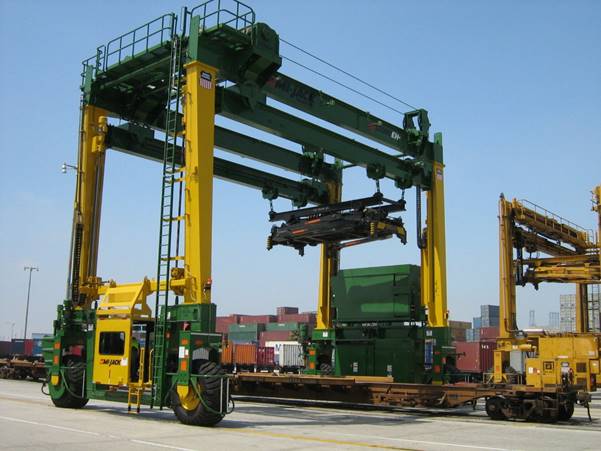
The colossal scale of equipment like port cranes, container carriers, and heavy-duty hoists—once entirely reliant on diesel—will progressively transition to fully electrified, hybrid-powered systems, leading to a profound reduction in operational costs and a massive decrease in their environmental footprint.
The future of lifting equipment is no longer just about brute power; it’s about intelligence, efficiency, and sustainability. Companies that proactively invest in these technologies will gain a decisive competitive edge, securing operational stability, reaping significant economic advantages, and solidifying their position as a forward-thinking leader in a new, cleaner industrial era.
Add: Crane Park, Xinxiang City, Henan Province, China
CEO. MENG QI HAN: Tel: +86-373-5288220
Email: txlet@hotmail.com
Henan office - China: Crane Park, Xinxiang City, Henan Province, China
Import and Export Manager Asia: Ms. Any Tam
Email: txlet@hotmail.com / Mobile: (+84)983 848 328 / Wechat: tkpanda06 / Zalo: (+84)983 848 328
Hanoi office - Vietnam: No 16, Nhan Hoa Alley, Hai Boi Street, Vinh Thanh Commune, Hanoi City, Vietnam
© 2009-2025 by TXLET