


Dual Safety Braking & Anti-Vibration Technology is a next-generation solution that elevates industrial safety by combining two independent brake systems with an intelligent control network. This dual protection eliminates single-point failures while advanced friction materials and active vibration damping cut noise, reduce wear, and extend equipment life. The technology lowers maintenance costs, boosts uptime, and meets strict global safety standards, making it ideal for applications from port cranes and high-rise elevators to electric vehicles, construction machinery, and renewable energy systems. Future integration of IoT, AI, and self-healing materials promises even smarter, more sustainable performance.
In the era of Industry 4.0, where automation and high-speed operations are pushing the boundaries of what’s possible, industrial safety has become a paramount concern. According to statistics from the Occupational Safety and Health Administration (OSHA) and other global safety organizations, braking system failures are a leading cause of serious accidents involving lifting and heavy machinery. The staggering figure of 25% of incidents resulting from brake failures is more than a statistic—it’s a stark reminder of a long-standing safety gap.
To decisively address this challenge, leading manufacturers have developed Dual Safety Braking & Anti-Vibration Technology—a breakthrough hailed as a “silent revolution” in the mechanical engineering field. This is not merely a technical product; it’s a new design philosophy that places absolute safety at its core. The technology combines precision mechanics, advanced materials, and artificial intelligence to create a dual-layered protection system, safeguarding people, assets and ensuring the continuous operation of production lines.
Before diving into the solution, it’s crucial to understand the problem. Traditional braking systems, with only a single brake mechanism, pose several critical risks:
Single-brake systems rely on a lone friction interface. If brake pads wear unevenly, springs break, or pistons jam, the stopping force drops dramatically. Even a minor crack in a single brake shoe can cascade into a total loss of stopping capability. In a 2019 study, mechanical failure accounted for 45% of all reported crane brake incidents. The components are under constant stress, and even with regular maintenance, unforeseen defects can lead to sudden, catastrophic failures. The lack of a backup system means there is zero margin for error.
Heavy machinery and cranes depend on consistent power. Sudden outages or faulty control circuits can render a single brake unable to engage. For a crane carrying 100 tons of steel, that could mean a catastrophic free fall within seconds. The problem is compounded in complex industrial environments where power grids can be unstable or a single short circuit can disable an entire machine. Standard emergency power backups often have a slight delay, which can be the difference between a controlled stop and an uncontrolled crash. This single point of electrical failure represents a severe and unaddressed vulnerability in older systems.
Factories, shipyards, and mining sites are rarely pristine. Dust, oil mist, saline air, and extreme heat all degrade braking performance. A shipyard crane operating in a corrosive, salt-laden environment will experience accelerated wear on its brake components. Similarly, a crane in a steel mill exposed to high temperatures will see a significant reduction in the friction coefficient, leading to brake fade. In these conditions, stopping distances lengthen, and the likelihood of slippage increases. The single-brake system has no mechanism to compensate for these environmental variables, leading to a silent, progressive decline in safety over its operational life.
Uneven friction generates jarring vibrations and noise, which accelerate wear on gearboxes, drive shafts, and bearings. Over time, this multiplies maintenance costs and can cause structural fatigue in the supporting frames. These vibrations can be measured at over 80 dB, creating a fatiguing and unsafe working environment. This dynamic wear is a hidden cost of traditional braking—it shortens the lifespan of an entire machine, not just the braking components, and leads to more frequent and expensive overhauls.
Instead of one, this technology employs two independent brake mechanisms (Primary Brake and Secondary/Emergency Brake). Each operates on a distinct physical principle or has its own separate power source.
Primary Brake: This is the daily-use brake, responsible for smoothly and precisely controlling the stop under normal operating conditions. It's designed for optimal performance, minimizing noise and wear.
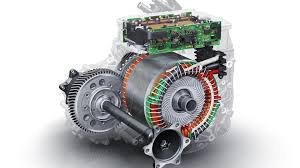
Secondary/Emergency Brake: This is the ultimate "safety net." It remains in a standby state, operating completely independently of the primary brake. When the primary brake fails to perform its function (due to malfunction, overload, or power loss), the emergency brake activates instantly, bringing the equipment to a safe halt.
This complete separation eliminates the possibility of simultaneous system failure. If the primary brake’s control circuit short-circuits, the emergency brake still receives the distress signal from the sensors and activates. This ensures that even in the worst-case scenario, the equipment remains under control.
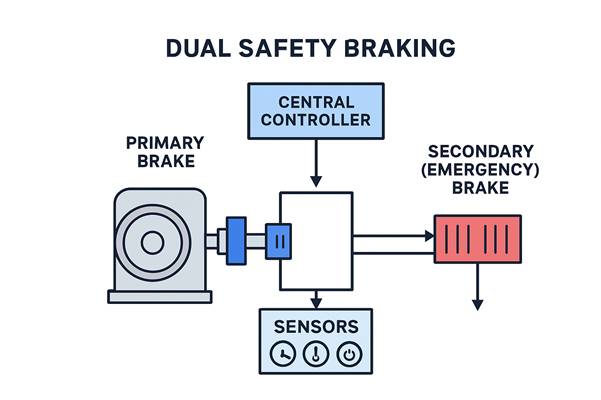
The true "wow" factor of dual braking technology isn't just having two brake units, but the Central Controller. This is an intelligent microprocessor that continuously collects data from a dense network of sensors:
Speed Sensors: Measure the acceleration and angular velocity of the shaft. This allows the controller to detect any slippage or uncontrolled acceleration, a key sign of a failing primary brake.
Clamping Force Sensors: Ensure the brake operates with the precise stopping force. The controller can adjust this force in real-time to match the load, preventing over-braking or under-braking.
Temperature Sensors: Monitor brake pad temperature to warn of overheating.
Air Gap Sensors: Track brake pad wear in real-time, providing highly accurate data on the component's lifespan.
When a sensor detects an anomaly, such as a sudden increase in acceleration due to a slipping load, the primary brake’s temperature exceeding a threshold, or a power outage, the controller instantly sends a signal to the emergency brake. This process occurs in mere milliseconds, far faster than any human reaction, ensuring the equipment stops safely and in time.
Continuous data logging allows for predictive maintenance. The system analyzes data trends on pad wear, temperature spikes, and clamping force variations. Through sophisticated algorithms, the system can forecast pad replacement windows with over 90% accuracy, enabling scheduled maintenance and virtually eliminating costly unplanned downtime. This capability transforms maintenance from a reactive, emergency-driven process to a planned, efficient, and cost-effective operation.
Chapter III: The Art of Smoothness - Anti-Vibration & Noise Reduction Technology
Jerky stops, screeching noises, and jarring vibrations are all signs of an inefficient system. The new technology provides a comprehensive solution, from materials to algorithms.
Engineers have moved away from traditional materials and developed high-grade composite friction compounds. The goal is to provide a consistent friction coefficient regardless of temperature, load, or environment.
Ceramic Composite: Offers an extremely stable friction coefficient at both low and high temperatures, excellent wear resistance, and significantly reduced noise.
Carbon-Carbon: An ultra-light, ultra-strong material capable of withstanding temperatures up to thousands of degrees Celsius. This material, often found in jet aircraft and F1 race cars, has now been adapted for heavy industry.
Sintered Copper Alloys: Provide a perfect balance between mechanical strength and heat resistance, suitable for humid and dusty environments.
These materials eliminate the "stick-slip" phenomenon, a primary cause of screeching and vibration, and extend brake pad life by up to 30-40% compared to conventional materials.
Beyond materials, the system uses intelligent damping techniques to manage the kinetic energy of the stopping process.
Elastomeric Dampers: Absorb vibrational energy from the brake before it transfers to the shaft.
Linear Braking Force Control: The intelligent controller uses algorithms to increase or decrease the braking force smoothly, eliminating the jarring effect of a sudden stop.
Dynamic Balancing: Rotating components like shafts and brake discs are precisely balanced, minimizing resonant vibrations.
Field tests show that modern dual braking systems can reduce noise levels to below 60 dB (equivalent to normal conversation), creating a much quieter and safer working environment and reducing operator stress.
Investing in dual braking technology is not an expense—it’s a strategic investment that delivers long-term benefits:
Preventing sudden breakdowns minimizes unscheduled downtime, one of the most significant economic losses for factories. For production lines with downtime costs reaching tens of thousands of dollars per hour, this can result in a massive ROI (Return on Investment).
Longer pad life, fewer gearbox failures, and smarter maintenance scheduling lower the lifetime operational cost. Independent studies show that plants adopting dual braking report maintenance savings of 20–25% over five years. This includes savings on replacement parts, labor, and the avoidance of large-scale overhauls caused by component damage.
Products using dual braking technology that meet stringent international safety standards like ISO 12100, EN 81 (Europe), OSHA 1910.179 (USA), and certifications like CE and UL can more easily expand into global markets, especially those with high safety requirements. This commitment to superior safety is a powerful marketing tool that builds trust and distinguishes a company from its competitors.
Dual braking technology has moved beyond the lab to become a new standard in many key industries:
Massive container ports in Singapore and Rotterdam (Netherlands) use dual braking systems on their gantry cranes, ensuring accurate and safe stopping of hundreds of tons of cargo in harsh, windy, and salty environments.
In skyscrapers in Dubai and Shanghai, dual braking is a mandatory requirement under the EN 81 standard. It ensures the elevator car stops smoothly, with vibrations as low as 0.15 m/s², providing a luxurious and secure ride. In case of an emergency, the dual brake can halt a fully loaded cabin safely, a critical feature in buildings that house thousands of people.
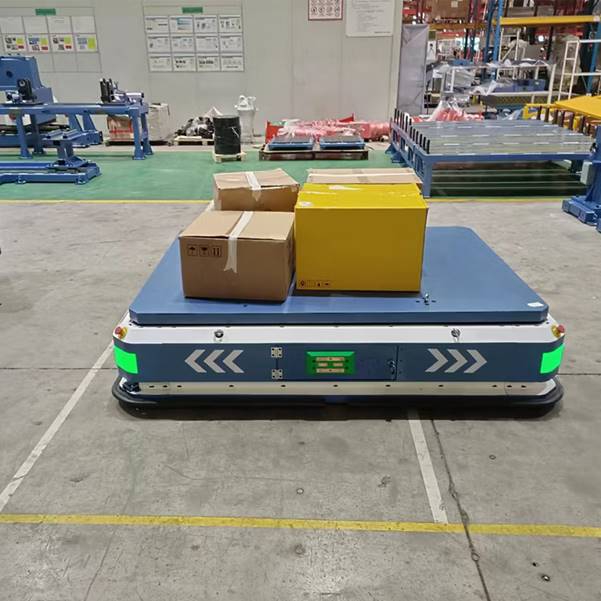
High-end EVs combine regenerative braking with mechanical braking (a form of dual braking). If the regenerative system fails, the mechanical brake provides a safety backup. Similarly, autonomous haul trucks in mines and AGVs (Automated Guided Vehicles) in warehouses integrate dual braking for precise and safe operation.
Tunnel Boring Machines (TBMs), tower cranes, and massive earth movers require precise load control. Dual brakes provide an extra layer of fail-safe protection during extreme operations.
Wind-turbine yaw systems and industrial robots increasingly adopt dual braking to maintain stability during sudden gusts or unexpected power cuts, protecting expensive blades and robotic arms.
The evolution of dual braking technology is not slowing down. The next generation will be deeply integrated with IoT and AI to create self-learning, autonomous systems.
Sensors will stream real-time data on wear, temperature, and performance to the cloud. Maintenance engineers can receive alerts on their smartphones or tablets, allowing them to schedule component replacement before any failure occurs proactively. This shifts maintenance from a reactive, emergency-driven process to a predictive, data-driven one, reducing costs and increasing efficiency.
AI will analyze vast datasets from millions of braking cycles to accurately predict the exact moment maintenance is needed. By identifying subtle failure patterns that are invisible to humans, AI can recommend specific service actions, virtually eliminating the risk of unplanned downtime. This technology can also learn to adapt braking force based on environmental conditions, optimizing performance in real-time.
Research is focused on nano-ceramic materials, recycled carbon fibers, and even self-healing compounds. These advancements promise lighter, more durable, and more environmentally friendly brake pads. Future brakes may be able to repair microscopic cracks on their own, further extending their lifespan and reducing waste.
Dual Safety Braking & Anti-Vibration Technology is not an option—it is a necessity in the new industrial era. It proves that safety is not a hindrance to innovation but a powerful driving force for it. This technology represents a monumental leap forward, fundamentally changing how industries approach mechanical control and risk management.
For manufacturers, logistics providers, and construction companies, adopting this technology is a strategic move:
Dual braking technology is the ideal solution to the challenges of safety and efficiency, shaping a sustainable industrial future where machines operate intelligently, people work safely, and productivity is optimized.
Add: Crane Park, Xinxiang City, Henan Province, China
CEO. MENG QI HAN: Tel: +86-373-5288220
Email: txlet@hotmail.com
Henan office - China: Crane Park, Xinxiang City, Henan Province, China
Import and Export Manager Asia: Ms. Any Tam
Email: txlet@hotmail.com / Mobile: (+84)983 848 328 / Wechat: tkpanda06 / Zalo: (+84)983 848 328
Hanoi office - Vietnam: No 16, Nhan Hoa Alley, Hai Boi Street, Vinh Thanh Commune, Hanoi City, Vietnam
© 2009-2025 by TXLET