


Graphene-reinforced steel is a breakthrough composite that combines traditional steel with nano-scale graphene flakes to achieve exceptional strength, lower density, and superior corrosion resistance. Graphene’s atomic honeycomb structure “pins” the steel’s crystal lattice, distributing stress evenly and blocking moisture and oxygen, which boosts tensile strength by up to 40 % while reducing weight. Industrial production uses advanced methods such as powder metallurgy, in-situ reactions, and thermo-mechanical treatments to ensure uniform dispersion of graphene. This ultra-light, ultra-strong material offers major benefits for cranes, offshore structures, shipbuilding, and other heavy-duty applications, cutting energy use, lowering maintenance costs, and supporting sustainable, low-carbon construction.
The 21st century has seen an explosion of megastructures and industrial machinery, from skyscrapers reaching for the clouds to massive cranes at bustling seaports. The global economy's relentless pace has intensified the demand for materials that can transcend the limitations of traditional carbon steel. Engineers and designers are now seeking solutions to simultaneously reduce structural weight, increase strength, extend lifespan, and improve resistance to harsh environments. This quest is driven by a desire for greater operational efficiency, reduced maintenance, and the ability to build larger, more complex, and more durable structures.
Traditional carbon steel, though a stalwart of engineering for centuries, faces significant constraints. Its high density adds considerable dead load to foundations, increasing material costs and placing greater strain on supporting structures. It is also inherently vulnerable to corrosion in aggressive climates, such as those found in coastal areas or industrial zones, leading to costly and frequent maintenance cycles. Furthermore, its fatigue resistance is limited under repeated heavy stresses, a critical drawback for machinery like cranes and robotic arms that undergo millions of load-unload cycles. These factors collectively lead to higher operational costs, more frequent downtime, and restricted design possibilities for a new generation of infrastructure.
It is in this context that Graphene-Reinforced Steel has emerged as a revolutionary answer. By combining the proven strength of traditional metallurgy with the unprecedented capabilities of advanced nanotechnology, this composite material promises to fundamentally reshape the future of heavy lifting, construction, and critical infrastructure. It represents not just an incremental improvement, but a true paradigm shift in the way we design and build.
Graphene is not merely a thin sheet of carbon; it's a marvel of materials science and a testament to the power of atomic-level engineering. With a honeycomb-shaped crystalline structure that is only one atom thick, it exhibits extraordinary properties that no other material can match. The groundbreaking work of scientists Andre Geim and Konstantin Novoselov, which earned them the Nobel Prize in Physics in 2010, unlocked the potential of this two-dimensional material, paving the way for a myriad of applications from electronics to composites.
Graphene's exceptional strength comes from the robust covalent bonds between its carbon atoms. Its tensile strength measures up to 130 GPa, which is roughly 200 times stronger than the strongest steel alloys available today. This makes it one of the most durable substances known to science. The analogy of an atomic-scale chainmail is fitting: each atom is tightly linked to its neighbors, creating a fabric of immense strength.
Despite its immense strength, graphene is incredibly light. Its density is only about 1.06 g/cm³, making it significantly lighter than aluminum (2.7 g/cm³) and dramatically less dense than steel (7.85 g/cm³). This low density is a key advantage, as it enables engineers to design lighter structures without compromising on load-bearing capacity, reducing foundation requirements and material transport costs.
Graphene is an exceptional conductor of both electricity and heat. Its electrons can move freely across the lattice with minimal scattering, giving it superior electrical conductivity compared to copper. Similarly, its tightly packed atomic structure allows for efficient heat transfer, making it a valuable material for thermal management. While this is less critical for a structural material like steel, these properties highlight the versatility and potential of graphene in multi-functional components.
These extraordinary properties—unrivaled strength, remarkable lightness, and high conductivity—form the foundation for creating a new class of steel with performance far exceeding anything previously considered possible. The controlled introduction of this "wonder material" into the steel matrix is the core of this revolutionary technology.
Incorporating graphene into steel is not a simple mixing process. It is a complex engineering procedure in which tiny graphene flakes act as “nano-locks” to reinforce the steel’s crystalline structure.
When uniformly dispersed, microscopic graphene flakes “pin” the grain boundaries within the steel’s crystal lattice. This prevents the slippage and movement of atomic layers, which is a primary mechanism for deformation and loss of stiffness. The result is a steel matrix that is significantly harder and stronger, resisting both tensile and compressive forces.
Graphene creates a three-dimensional reinforcing network inside the steel. When the material is subjected to heavy loads or impacts, this network absorbs and redistributes energy evenly across the entire structure rather than allowing it to concentrate at weak points. This mechanism effectively prevents micro-cracks and delays fatigue failure.
Graphene’s nearly impermeable carbon lattice forms an incredibly effective protective barrier. Its dense structure ensures that water molecules, oxygen, and corrosive chemicals cannot easily penetrate to the underlying steel. In environments such as coastal seaports, offshore oil rigs, or chemical plants—where ordinary steel is prone to rust and pitting—this graphene barrier significantly increases the service life of the material and reduces the need for expensive and environmentally unfriendly anti-corrosion coatings. The unique atomic structure of graphene makes it a natural guard against environmental degradation.
Laboratory tests and early field trials indicate that adding only 0.1% to 1% of graphene by weight can raise the steel's tensile strength by 30–40% while lowering its effective density from 7.8 g/cm³ to roughly 6.5–7.0 g/cm³. This seemingly small addition provides a powerful and economically viable balance of technical performance and efficiency.
Scaling graphene-reinforced steel from lab prototypes to industrial volumes presents major challenges. The key is achieving homogeneous dispersion of graphene throughout the steel matrix—any clumping of graphene flakes would create weak zones instead of reinforcement.
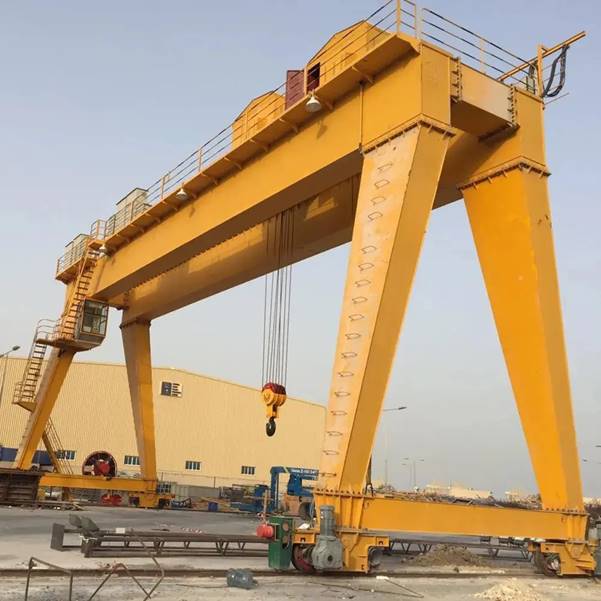
This widely used method begins with nano-graphene powder mixed with fine steel powder. The mixture is compacted under high pressure and sintered at elevated temperatures to form billets or near-net-shape parts. Powder metallurgy allows precise control of composition and is suitable for complex shapes, but requires careful handling to prevent graphene agglomeration.
A more sophisticated approach forms graphene directly inside the molten steel. Carbon-rich gases react with the melt under controlled conditions, precipitating graphene layers that bond directly to the iron crystals. This method creates an exceptionally strong interface between graphene and steel but demands advanced furnace control and continuous monitoring.
After alloying, the composite is subjected to carefully designed heat and pressure cycles. These treatments refine grain size, optimize the graphene distribution, and relieve internal stresses, ensuring that the material achieves its maximum mechanical and anti-corrosive properties.
Every batch of graphene-reinforced steel undergoes rigorous ultrasonic inspection, tensile testing, and fatigue analysis. Engineers measure not only strength and density but also electrical conductivity and thermal performance—properties critical for high-tech applications such as smart infrastructure and sensor-embedded components.
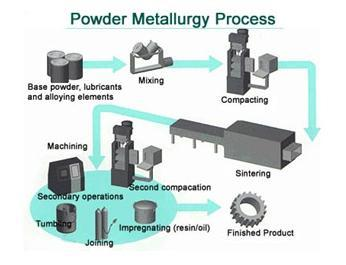
The exceptional properties of graphene-reinforced steel have opened a wide array of real-world uses, especially where a high strength-to-weight ratio is a critical design requirement.
For heavy lifting equipment, every kilogram of dead weight on the structure is a kilogram that cannot be used for lifting cargo. By reducing the weight of a main girder by 15–20%, a crane can lift significantly heavier loads without needing to upgrade its motors or cables. The lower weight also cuts operational energy costs and reduces wear on wheels, rails, and bearings, extending the system's overall lifespan and minimizing expensive downtime for maintenance.
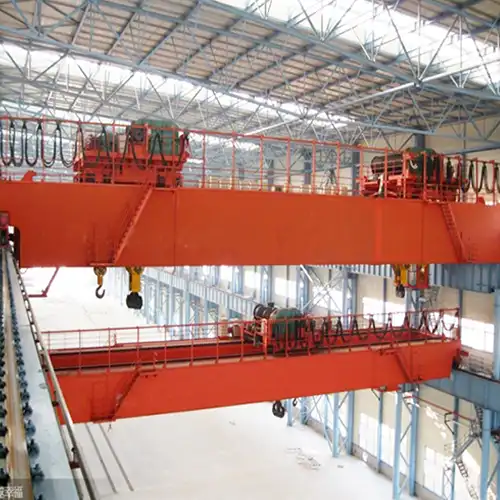
Large-scale frameworks, such as those used for offshore oil platforms, stadium roof trusses, or port bridges, demand materials that can withstand intense structural stresses and prolonged exposure to corrosive environments. Graphene-reinforced steel provides the necessary strength-to-weight ratio and superior corrosion resistance to meet these challenges, making it an ideal choice for critical infrastructure in hurricane-prone regions or corrosive coastal environments.
For mobile cranes, a lighter frame translates directly into improved fuel economy and easier transportation between job sites. This advantage is critical for major infrastructure projects that require rapid deployment and frequent relocation of heavy equipment. The reduced weight also enhances the crane's stability and operational speed, improving overall job site efficiency.
Ships and marine equipment operate in some of the harshest environments on Earth. Hulls and load-bearing components made from graphene-reinforced steel are not only lighter but also far more durable and highly resistant to saltwater corrosion. This leads to lower fuel consumption for shipping vessels and significantly longer dry-dock intervals for maintenance, offering a substantial economic advantage.
While still in early experimental stages, the aerospace sector is eyeing graphene-reinforced steel for components where extreme mechanical strength and resistance to thermal cycling are required. It could one day complement or even replace certain expensive titanium and aluminum alloys in the fuselage, engine components, or satellite structures, pushing the boundaries of what is possible in aeronautical engineering.
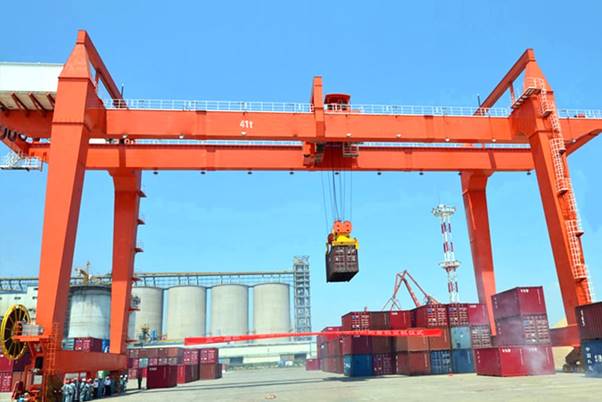
Adopting graphene-reinforced steel creates a virtuous economic and environmental cycle that benefits both businesses and the planet.
The lighter structures and components require less energy for lifting systems and use less fuel for mobile equipment, resulting in lower operational costs. For large industrial enterprises, these savings can total millions of dollars throughout the equipment's lifetime.
Lower Maintenance and Repair Costs
The material’s extended lifespan and exceptional corrosion and fatigue resistance mean fewer unscheduled shutdowns, less labor for repairs, and lower spare-part expenditures. This shift from reactive to predictive maintenance is a key component of modern industrial efficiency.
Using less steel to achieve the same or higher performance translates directly into lower carbon emissions during both production and transportation. The steel industry is a major global emitter of CO₂, so any reduction in material usage has a significant environmental impact. Companies adopting this material strengthen their Environmental, Social, and Governance (ESG) credentials and meet increasingly stringent sustainability goals, positioning themselves as leaders in a green economy.
Life-cycle cost analyses already show that despite a higher initial price point, graphene-reinforced steel can lower the total ownership costs by 20–30% over a typical 30- to 40-year service period. This long-term value proposition is what makes the investment so attractive.
The future of graphene-reinforced steel is not just about its properties, but about how it will integrate with the next wave of industrial technologies. Leading technology nations, such as Japan, the United States, and Germany, have begun producing and applying graphene-reinforced steel in pilot infrastructure and heavy equipment projects. As the cost of high-quality graphene decreases thanks to scalable chemical vapor deposition and other manufacturing breakthroughs, commercial adoption is expected to accelerate dramatically.
The next frontier lies in combining this material with digital and additive manufacturing. By combining graphene-reinforced steel with large-scale metal 3D printing, architects and engineers can design complex lattice structures and organic geometries that were previously impossible to create with conventional rolled steel. This synergy promises unprecedented mass optimization and structural efficiency, enabling entirely new forms of construction.
Researchers are also exploring hybrid composites where graphene-reinforced steel interfaces seamlessly with smart sensors and fiber-optic monitoring systems. This new generation of “intelligent steel” could continuously report on its own stress, temperature, and corrosion status, providing real-time data for predictive maintenance and ensuring the safety of critical megastructures.
Graphene-reinforced steel is more than just a stronger and lighter alloy; it is a paradigm shift for industries where weight, strength, and durability are paramount. It represents a fundamental breakthrough that will empower engineers to design structures and machinery that are safer, more efficient, and more sustainable.
Lighter yet stronger than traditional steel, it enables ambitious architectural and engineering feats.
Highly resistant to fatigue and corrosion, it dramatically extends the service life of cranes, bridges, ships, and offshore platforms.
Economically and environmentally advantageous, it supports a sustainable industrial future by reducing costs and carbon emissions.
From high-rise construction and next-generation maritime vessels to aerospace applications, graphene-reinforced steel is the physical manifestation of innovation—a powerful bridge between nanotechnology and heavy industry that will shape the skyline and infrastructure of the decades to come. Its arrival signals that the age of static materials is over, and the era of intelligent, high-performance composites has just begun.
Add: Crane Park, Xinxiang City, Henan Province, China
CEO. MENG QI HAN: Tel: +86-373-5288220
Email: txlet@hotmail.com
Henan office - China: Crane Park, Xinxiang City, Henan Province, China
Import and Export Manager Asia: Ms. Any Tam
Email: txlet@hotmail.com / Mobile: (+84)983 848 328 / Wechat: tkpanda06 / Zalo: (+84)983 848 328
Hanoi office - Vietnam: No 16, Nhan Hoa Alley, Hai Boi Street, Vinh Thanh Commune, Hanoi City, Vietnam
© 2009-2025 by TXLET