


The article "Cable-Free Linear Motor Hoisting" highlights a revolutionary technology that eliminates the need for steel cables in elevators. This system uses magnetic force to lift the cabin, allowing for unlimited vertical height, significantly reduced maintenance costs, and improved energy efficiency. By enabling cabins to move both vertically and horizontally, this innovation offers architects unprecedented design freedom and promises to transform future urban mobility by seamlessly connecting buildings into a single, cohesive transportation network.
Imagine stepping into an elevator at the base of a tower nearly a kilometer high. The doors slide shut and the cabin glides upward—silent, frictionless, cable-free. No steel ropes, no groaning pulleys, only the whisper of air and a barely perceptible magnetic hum.
For more than 150 years, the world’s vertical transportation has depended on cable traction. From New York’s Art Deco skyscrapers to mega-container cranes in bustling ports, heavy-duty steel cables have been the backbone. Yet those cables, however robust, have inherent limits: enormous self-weight, stretching, friction, and significant maintenance costs. As architects dream of buildings that soar beyond a thousand meters, those limits become formidable barriers. Cable-Free Linear Motor Hoisting—sometimes called “vertical maglev”—offers the breakthrough.
Urbanization adds urgency. The United Nations projects that by 2050, over 68% of humanity will live in cities. Future megacities of 30–40 million residents require a vertical transport system that is not only faster but also radically more efficient and sustainable.
Unlike a conventional rotary motor that must convert spinning motion to linear pull, a linear motor creates direct linear force. This eliminates the need for bulky gearboxes, counterweights, and the inherent friction of mechanical conversion. Picture the technology behind a high-speed maglev train, but rotated ninety degrees inside an elevator shaft. Instead of propelling the train forward, the magnetic force lifts the cabin upward.
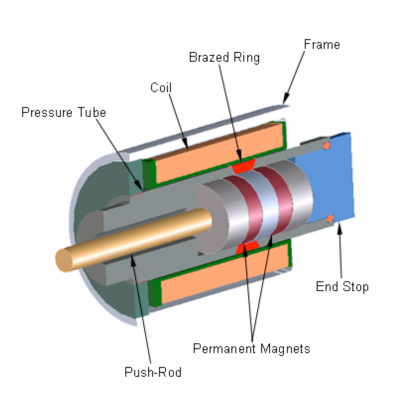
A linear motor is essentially an “unrolled” rotary motor. Instead of coils and magnets arranged in a circle, they stretch along a straight path to generate thrust with no mechanical conversion.
This is the "track" of the system, consisting of electromagnetic coils that line the elevator shaft. A precisely timed three-phase alternating current creates a traveling magnetic wave along the entire length. The speed of this wave, controlled by the frequency of the current, directly dictates the speed of the cabin.
Mounted to the elevator cabin, this part contains a series of powerful permanent magnets or secondary windings. The Lorentz force—the fundamental principle of electromagnetic propulsion—describes the interaction between the moving magnetic field of the stator and the magnetic field of the slider, propelling the cabin upward or downward with incredible force and precision.
This is the digital brain of the system, a highly sophisticated computer programmed with AI and IoT algorithms. It doesn’t merely switch power on or off; it continuously modulates current, frequency, and phase to control speed, acceleration, and position to within millimeters. A network of laser and magnetic sensors feeds real-time data back to the controller, enabling it to respond to changing loads and environmental conditions instantly for faultless safety.
Engineers can deploy Linear Synchronous Motors (LSM) for maximum efficiency or Linear Induction Motors (LIM) for rugged industrial settings. Modern prototypes integrate regenerative braking, a crucial feature that captures the kinetic energy of the descending cabin and feeds it back into the grid, reducing net power use by up to 30% compared to conventional drives. This architecture eliminates gearboxes, ropes, and counterweights, slashing mechanical friction and enabling acceleration profiles of 1.5–2 m/s² with a ride so quiet you can hold a whispered conversation.
While the initial investment for a cable-free system may seem high, the long-term financial benefits make it a superior choice for future developments. A detailed cost-benefit analysis reveals a compelling business case that extends far beyond a simple comparison of upfront prices.
The most significant economic advantage is the drastic reduction in maintenance costs. By eliminating expensive and heavy components like steel cables, pulleys, and gearboxes, building owners can save up to a quarter of their total operating expenses. There is no need for frequent lubrication, cable inspection, or costly replacements, leading to substantial savings over the building’s lifecycle.
The ability to transport more people faster and to greater heights increases a building's functional capacity and desirability. A shorter elevator wait time translates to higher productivity for tenants and a more premium experience for residents, which can increase property values and rental rates. The multi-cabin system, in particular, allows for more efficient use of space, as fewer elevator shafts are needed to serve the same number of people.
The inherent efficiency of linear motors and the integration of regenerative braking translate directly into lower energy bills. These systems can reduce a building's energy consumption for vertical transport by up to 30%, which not only cuts costs but also aligns with corporate and governmental sustainability goals, potentially qualifying for green building certifications and tax incentives.
While the installation cost is higher, the cumulative savings in energy consumption and maintenance, combined with increased revenue from optimized building capacity, lead to a rapid Return on Investment (ROI). For a supertall skyscraper, this payback period can be as short as 5-7 years, making the cable-free system a financially sound decision in the long run.
The shift to cable-free motion provides far more than a technical upgrade; it redefines the possibilities of architecture, passenger comfort, and urban planning.
By removing the dead weight of steel cables, the traditional height limit dissolves, allowing architects to conceive towers rising one or even two kilometers with interconnected sky bridges, diagonal shafts, and horizontal transit links. Cabins can move in virtually any direction—vertical, horizontal, or along elegant curves—so designers can create spiral, spherical, or multi-cluster structures where elevators behave more like three-dimensional subway cars than vertical boxes. For the first time, buildings can become complex, interconnected ecosystems, not just stacks of floors.
Conventional high-rise elevators require frequent inspections, regular lubrication, and rope replacement every few years—costs that can represent a quarter of total operating expenses. Linear motor solutions eliminate the majority of those mechanical parts, reducing downtime, while sensors and predictive algorithms constantly monitor coil temperature, magnetic flux, and cabin location to detect and address irregularities before they become problems.
Safety is complex and extends much beyond the conventional mechanical protections.
In the event of a power failure, the system automatically uses the interaction between the permanent magnets on the cabin and the coils in the shaft to create a powerful magnetic drag, bringing the cabin to a gentle, controlled stop.
As a final, failsafe measure, dual mechanical clamps secure the cabin to the guide rails, providing an unbreakable physical lock that ensures absolute security.
The AI controller coordinates every component in real-time, maintaining stability even during extreme grid fluctuations and responding to unexpected events with a speed and precision no human operator could match.
Passengers experience a journey of unparalleled tranquility. The absence of mechanical friction means near-silent travel at noise levels below thirty-five decibels—quieter than a modern library—and virtually no vibration. This is a huge advantage not only for the passenger experience but also for sensitive locations like medical institutions, research laboratories, and precision manufacturing, where even little oscillations can harm delicate equipment or impair investigations. The incorporation of regenerative energy recovery also allows huge buildings to reduce annual electricity usage by thousands of megawatt-hours while significantly lowering carbon emissions, which aligns well with global environmental goals.
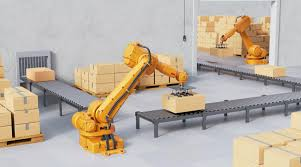
This technology is poised to revolutionize not only the elevator industry but also many other sectors, pushing the boundaries of what is possible.
The technology allows multiple cabins to operate independently in a single shaft, a concept known as multi-cabin systems. This innovation triples or quadruples transport capacity and dramatically reduces waiting times, effectively solving the "elevator bottleneck" that plagues modern high-rises.
In massive distribution centers, multi-story cabins powered by linear motors can transport goods vertically at high speeds, reducing bottlenecks, optimizing storage space, and minimizing the need for manual labor.
Industries like semiconductor fabrication, medical labs, and automotive production require extremely low vibration and a clean, controlled environment. The cable-free system meets these standards for cleanliness, quietness, and absolute precision, ensuring product integrity and manufacturing quality.
The applications are limitless, from automating storage in underground data centers to multi-level parking garages that move cars with robotic precision. This technology is even being explored for futuristic projects, such as vertical launch systems for small-scale space vehicles or high-speed transit within mega-structures.
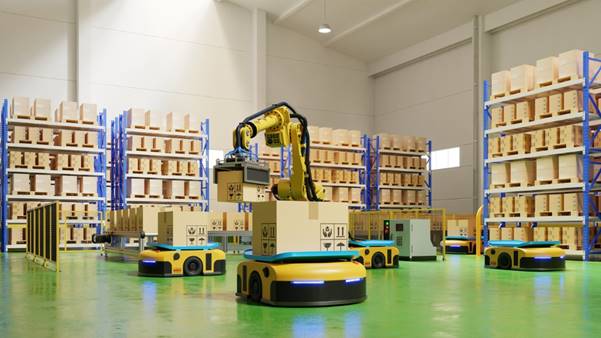
The emergence of Cable-free linear motor hoisting is more than just a technological shift; it's a ripple effect across entire industries and the global economy.
Architects are not constrained by a central elevator core anymore. They can construct adaptable, modular buildings with decentralized vertical transportation, resulting in "cluster" structures with horizontally moving cabins. This enables the development of fully multidimensional communities in which residential, commercial, and recreational spaces are harmoniously integrated.
The reduced demand for thousands of miles of heavy-duty steel cables will impact the metallurgy and materials production industries, driving a shift towards other materials and technologies.
The complexity of these systems requires advanced control solutions. This will drive innovation in software, AI, and IoT for predictive maintenance, real-time optimization, and automated resource management. The demand for skilled engineers and data scientists in this field will grow exponentially.
From architectural design firms and equipment manufacturers to mechanical and electrical contractors, all can tap into new business models, creating a multi-billion-dollar market. Companies can now offer not just an elevator, but a complete, integrated mobility solution for a building.
Despite its immense potential, the technology faces some hurdles that must be overcome for widespread adoption.
The smart control systems and linear motors are currently more expensive to install than traditional cable solutions. However, a long-term ROI (Return on Investment) analysis shows that the savings in maintenance, energy consumption, and increased building capacity can quickly offset the initial investment, often within a few years. As production scales up, manufacturing costs are expected to fall significantly.
This demands the development of new safety standards and regulations, as existing ones were written for cable-based systems. Industry leaders are collaborating with international standards organizations to create a new framework that addresses the unique challenges of electromagnetic propulsion, ensuring the highest level of safety and reliability.
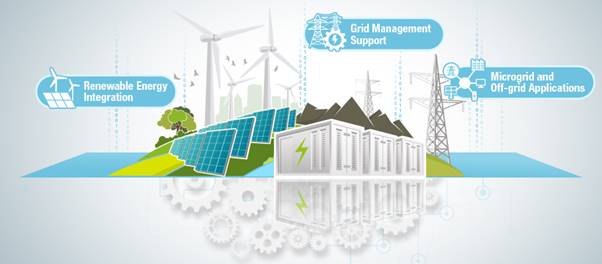
A single, large-scale system requires a significant, stable power supply. This necessitates smart energy management systems, including backup batteries and integration with the smart grid to manage peak loads and ensure continuous operation.
Even in its early trial stages, this technology is already showing its real-world potential. Megacities in Asia, the Middle East, and Europe are planning to integrate these systems into their new skyscrapers. Within the next 5-10 years, vertical travel with Cable-Free Linear Motor Hoisting could become as common as traditional elevators are today.
This is more than just an elevator technology; it's part of the future urban transit system. Imagine an underground magnetic rail network connecting city districts, with "stations" being the skyscrapers themselves. Autonomous cabins could pick up passengers from a central hub, take them directly to their office on the 70th floor, then continue their journey horizontally to another building. The line between public transit and elevators will blur, creating a seamless and highly efficient mobility network.
Cable-free linear motor hoisting is far more than a clever alternative to cables; it is a foundational shift in how humanity interacts with space. By removing the physical and conceptual limits of steel ropes, it grants architects, engineers, and city planners the ability to design environments that were once confined to speculative fiction. No cables mean no structural ceiling, no constant lubrication schedules, no fear of rope fatigue—only the freedom to build higher, move faster, and connect buildings, neighborhoods, and entire metropolitan regions into a seamless vertical and horizontal continuum.
TXLET is proud to pioneer this frontier and invites developers, architects, and civic leaders to explore the opportunities this technology opens. The era of cable-free vertical mobility has already begun, and with each new installation, we move closer to a world where movement in every dimension is as effortless as thought.
Add: Crane Park, Xinxiang City, Henan Province, China
CEO. MENG QI HAN: Tel: +86-373-5288220
Email: txlet@hotmail.com
Henan office - China: Crane Park, Xinxiang City, Henan Province, China
Import and Export Manager Asia: Ms. Any Tam
Email: txlet@hotmail.com / Mobile: (+84)983 848 328 / Wechat: tkpanda06 / Zalo: (+84)983 848 328
Hanoi office - Vietnam: No 16, Nhan Hoa Alley, Hai Boi Street, Vinh Thanh Commune, Hanoi City, Vietnam
© 2009-2025 by TXLET