


The adoption of PMSM (Permanent Magnet Synchronous Motors) and Direct Drive technology is revolutionizing the hoisting industry by replacing inefficient geared systems. This combination delivers IE4/IE5 efficiency and millimeter-level precision by eliminating energy losses and complex gearboxes, resulting in 30% power savings and 70% lower maintenance costs. Ultimately, this technology provides the reliability, quiet operation, and data connectivity necessary to meet strict ESG goals and power Industry 4.0 smart factory environments.
The lifting and hoisting industry is undergoing a profound transformation, moving beyond incremental improvements toward a complete architectural overhaul. At the heart of this change are Permanent Magnet Synchronous Motors (PMSM) and Direct Drive technology. Far from being just components, they represent a fundamental re-engineering of the traditional drive system. When seamlessly integrated into advanced solutions like those offered by TXLET, the outcome is exceptional: ultra-smooth, vibration-free operation, instantaneous torque response, and measurable, outstanding energy savings. This convergence of mechanical and digital efficiency is the cornerstone for building truly Industry 4.0-ready smart factories.
PMSM technology is establishing itself as the undisputed standard, rapidly displacing conventional AC Induction Motors (IM) in any application demanding the highest levels of precision, efficiency, and dynamic response. The key performance differentiator lies in the motor's rotor design and control mechanism.
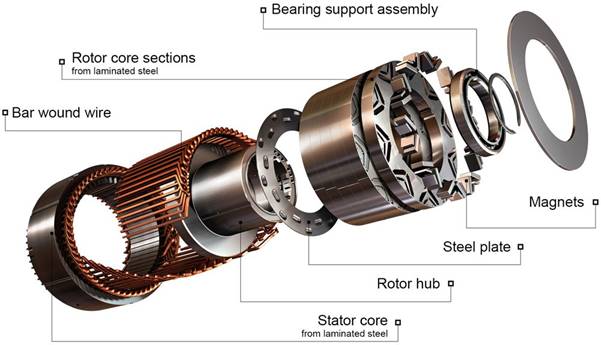
The single most significant efficiency advantage of the PMSM stems from its design. In IMs, energy is wasted as the rotor "slips" to induce current, and further losses occur from the energy required to create the rotor's magnetic field (excitation). The PMSM is a synchronous machine: its rare-earth permanent magnets provide the necessary flux, allowing the rotor to lock into the stator field's speed with zero slip and zero excitation current. This fundamental purity translates directly into substantially lower power consumption and minimal heat generation in the rotor.
While a high-efficiency IM might achieve IE3/IE4 standards at its design point (full load, nominal speed), its efficiency curve degrades rapidly at partial loads and low speeds. A PMSM, however, maintains its IE4 or even IE5 peak efficiency across the majority of its speed-torque envelope. For crane and hoist duties—characterized by frequent start/stop cycles and variable speed positioning—this flat, high-efficiency curve guarantees maximum energy savings under real-world operating conditions, unlike the theoretical maximums often cited for IMs.
The use of high-flux-density rare-earth magnets (like Neodymium) allows PMSMs to generate significantly more torque per unit of volume and mass. This translates into motors that are typically 30-50% lighter and smaller than IMs of equivalent power. The compact size not only reduces the deadweight on the crane structure, allowing for lighter component design and lower structural costs, but also features superior thermal management due to concentrated copper windings and efficient heat dissipation.
Due to lower operating temperatures and the absence of high rotor currents, PMSMs experience less thermal stress on windings and insulation. This significantly prolongs the expected lifespan of critical components (e.g., bearings and insulation), often yielding a 40% increase in operational hours compared to stressed induction motor counterparts, dramatically decreasing overall component wear.
PMSM drive systems rely on sophisticated FOC vector control algorithms. This technique allows the inverter to perfectly decouple and independently manage the motor’s flux-producing and torque-producing current components.
Millisecond-Level Torque Response: Torque is controlled with surgical precision in the millisecond range, essential for accurate positioning to fractions of a millimeter and ensuring that the load accelerates and decelerates smoothly, virtually eliminating load oscillation (sway) common in traditional systems.
Highly Effective Regenerative Braking: During the lowering cycle, the PMSM acts as a high-efficiency generator, converting the load's kinetic and potential energy back into usable electricity that can be returned to the grid. This capability not only results in energy returns of up to 30% but also significantly reduces reliance on and wear of the mechanical brake, extending its life and improving safety.
The closed-loop control system, utilizing high-resolution position feedback (encoders), ensures that the motor maintains its precise torque and speed output regardless of common environmental disturbances such as fluctuating temperatures, voltage variations, or mild contamination, delivering unparalleled lifting stability.
Direct Drive technology is the crucial mechanical partner to the PMSM. By removing the gearbox—a complex, wear-prone assembly of gears, bearings, and lubricants—Direct Drive simplifies the mechanical chain to its most robust form.
Gearboxes introduce unavoidable friction and lubrication losses, typically subtracting 5% to 20% from the overall system efficiency. Direct Drive transmits the motor’s torque directly to the hoist drum or wheel, maximizing the conversion of electrical energy into mechanical work and greatly boosting the overall system's efficiency.
The most compelling economic argument for Direct Drive is the complete elimination of gearbox-related service tasks, which include:
Zero Waste Oil: No need for periodic oil changes, oil analysis, or the costly and environmentally challenging disposal of industrial waste oil.
Zero Gear Wear Parts: Elimination of gear alignment checks, replacement of worn teeth, seals, and gearbox bearings, which are historically the primary cause of sudden mechanical failure.
This results in a verifiable reduction in lifecycle maintenance costs of up to 70% for the drive mechanism.
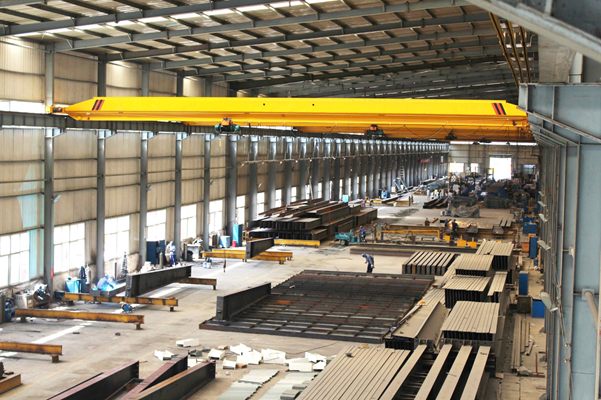
With dramatically fewer moving parts, the risk of catastrophic failure from mechanical wear is virtually eliminated. Direct Drive systems routinely achieve Uptime figures exceeding 99.5%, making them the ideal choice for mission-critical, high-throughput, and fully automated industrial processes.
Gear meshing is the chief source of acoustic noise and damaging vibration in conventional hoists. Direct Drive technology operates up to 50% quieter, creating a more ergonomic and safer workplace, while simultaneously reducing mechanical fatigue and stress on the crane's structural components and supporting sensors.
The only remaining lubrication requirement is for the main motor bearings (often sealed for life), which allows for significantly longer service intervals, lower labor costs, and less logistical complexity when maintaining a large fleet of equipment.
The PMSM + Direct Drive system offers measurable economic benefits and aligns strategically with modern corporate Environmental, Social, and Governance (ESG) principles.
The dual-efficiency gain (electrical from PMSM, mechanical from Direct Drive) results in a total power reduction of 15% to 30% over traditional geared IM systems.
Financial Impact Example: For a 30-ton industrial crane operating three shifts (over 4,000 hours annually), this can translate to an estimated 50-70 MWh in annual energy savings, creating substantial, recurring cost reductions that ensure a rapid Return on Investment (ROI) for the initial technology adoption.
The lower operating current requirement of PMSM drives results in less electrical demand. This enables the use of smaller gauge cables, lower-rated transformers, and reduced switchgear capacity, lowering both the CAPEX of new construction and the ongoing costs associated with managing facility heat loads.
The direct reduction in electricity consumption provides tangible evidence of a lower Scope 2 CO2 emissions footprint. This is an important metric for businesses pursuing net-zero commitments and ensuring compliance with stringent energy management standards such as ISO 50001.
By removing the need for gearbox oil, the system eliminates the regulatory burden and environmental risk associated with managing and disposing of hundreds or thousands of gallons of hazardous industrial waste oil across a facility fleet.
The extended lifespan of PMSM components and the dramatic reduction in replacement parts required for Direct Drive systems contribute positively to resource efficiency, a key component of the 'E' in ESG, by reducing material consumption over the equipment's lifetime.

These next-generation drive systems are not just efficient; they are intelligent. They are the physical engine designed to seamlessly integrate with digital ecosystems, forming the backbone of the Smart Factory.
TXLET solutions fully integrate PMSM/Direct Drive with an array of Industrial IoT sensors, including high-resolution absolute encoders, triaxial vibration sensors, precision temperature probes, and advanced torque monitors. This provides a continuous, granular, and reliable data stream for comprehensive asset health monitoring.
The FOC inverter monitors complex electrical signatures, such as current harmonics and phase balance. These metrics are incredibly sensitive to minor mechanical irregularities (like early bearing degradation or slight misalignment) and provide a superior level of early fault detection compared to traditional simple current or thermal protection switches.
Sophisticated Machine Learning (ML) algorithms ingest the multivariate data stream, identifying complex patterns and correlations (e.g., a simultaneous spike in a specific vibration frequency, a slight temperature rise, and an alteration in current signature). This allows for highly accurate, preemptive fault isolation and prediction weeks or months before a failure occurs.
By transitioning from fixed, time-based maintenance schedules, CBM ensures resources (labor and spare parts) are only deployed when predictive analytics mandate it. This not only maximizes component lifespan but also virtually eliminates disruptive, unplanned downtime, shifting maintenance from a cost center to a strategic operational advantage.
Operational data can be flawlessly shared with Enterprise Resource Planning (ERP), Manufacturing Execution Systems (MES), and Digital Twin platforms, allowing for centralized fleet oversight, automated spare parts ordering, and factory-wide performance optimization across multiple sites.
TXLET has pioneered the integration of PMSM and Direct Drive across its range of wire-rope hoists and European-standard cranes, delivering a distinct performance and cost advantage.
In sectors like aerospace, electronics manufacturing, or automated storage and retrieval systems (AS/RS), the vibration-free, smooth acceleration/deceleration, and millimeter-precision control of the TXLET PMSM Direct Drive is essential for minimizing product damage and ensuring assembly quality.
For heavy industrial applications like steel mills, foundries, or high-volume ports, the robust design of the PMSM system—featuring high Ingress Protection (IP) ratings and advanced cooling—guarantees unwavering operation despite high ambient temperatures, dust, and continuous, heavy-duty cycling.
TXLET actively provides flexible retrofit packages that enable facilities to upgrade existing legacy crane systems to PMSM Direct Drive without requiring a full structural replacement. This offers a highly compelling, cost-effective route to modernization and immediate energy/maintenance savings.
The adoption of this technology translates into a superior TCO over the equipment’s entire operational life:
Lowest OPEX: Significantly reduced energy bills combined with minimal maintenance labor and parts costs.
Highest Productivity: Near-zero unplanned downtime combined with faster, more accurate load cycles maximizes facility throughput.
Maximum Safety & Compliance: Enhanced safety through precise control, highly effective regenerative braking, and smart, preemptive monitoring.
The automotive industry, particularly the transition to Electric Vehicles (EVs), imposes extremely tight tolerances for material handling.
EV battery packs are incredibly heavy (often exceeding 500 kg) and expensive, yet they are highly sensitive to shock, impact, and misalignment during installation into the vehicle chassis. Traditional geared systems struggle to provide the fine, vibration-free movements necessary for this "marriage" process.
Silent, Vibration-Free Positioning: PMSM Direct Drive hoists provide ultra-smooth, controlled lifting and lowering, crucial for delicate components. The absence of gear meshing eliminates harmful micro-vibrations, minimizing the risk of damage to sensitive battery cell connections.
The instantaneous torque control and high-resolution encoders enable precise, millimeter-level final positioning required to align battery packs with the vehicle's structural mounting points, ensuring the integrity of the finished vehicle. This reduces assembly errors and speeds up cycle times.
Handling the massive components of renewable energy infrastructure requires power, control, and absolute safety, often in open-air, dynamic environments.
Modern wind turbine blades can be over 80 meters long. Moving these huge, aerodynamically sensitive, and high-value components requires extremely high torque for the load and exceptional positioning accuracy to prevent swinging or contact damage during transport and placement.
High Torque and Anti-Sway Control: The PMSM motor delivers maximum torque at low speeds for secure initial lifting. When combined with vector control, it provides active anti-sway functionality, maintaining control over the massive suspended load even with external disturbances (like mild wind gusts).
Safety Through Regenerative Braking: When a blade needs to be lowered, the regenerative braking system handles the high potential energy, reliably managing the descent and reducing the wear and heat on the mechanical holding brakes. This enhances safety and extends the lifespan of the critical braking system components.
In the logistics sector, the focus is on speed, throughput, and seamless integration with Automated Guided Vehicles (AGVs) and robotic systems.
Automated warehouses require hoists and cranes to operate 24/7 with zero unscheduled downtime. Material flow must be perfectly synchronized with high-speed automated systems, demanding rapid, reliable communication and operational continuity.
Flawless Synchronization (Industry 4.0): The digital nature of the PMSM drive allows for seamless integration and communication with the central Warehouse Management System (WMS) or MES. This ensures that the hoist's movements are perfectly synchronized with AGVs and pick-and-place robots, eliminating bottlenecks and maximizing throughput efficiency.
Resilience through Predictive Maintenance: By providing rich data (vibration, current, temperature), the system enables AI-driven predictive maintenance. The warehouse manager is alerted weeks in advance if a bearing fault is developing, allowing maintenance to be scheduled during planned downtime, ensuring the uptime objective of exceeding 99.5% is consistently met.
The Next-Gen Electric Drive Systems—PMSM and Direct Drive—merge engineering excellence with economic and environmental pragmatism. They deliver:
By integrating these technologies, TXLET is not simply selling equipment; it provides the foundation for a sustainable, resilient, and intelligent future—where every lift embodies the power of advanced drive innovation.
Add: Crane Park, Xinxiang City, Henan Province, China
CEO. MENG QI HAN: Tel: +86-373-5288220
Email: txlet@hotmail.com
Henan office - China: Crane Park, Xinxiang City, Henan Province, China
Import and Export Manager Asia: Ms. Any Tam
Email: txlet@hotmail.com / Mobile: (+84)983 848 328 / Wechat: tkpanda06 / Zalo: (+84)983 848 328
Hanoi office - Vietnam: No 16, Nhan Hoa Alley, Hai Boi Street, Vinh Thanh Commune, Hanoi City, Vietnam
© 2009-2025 by TXLET