


AI-Driven Dynamic Load Balancing is a breakthrough technology that uses artificial intelligence and a sensor network to automatically analyze, predict, and adjust crane loads in real-time. By eliminating oscillations and optimizing movement, this system significantly boosts productivity and saves energy, while also ensuring absolute safety and extending equipment lifespan. It is the key for heavy industries to transition to a new era of intelligent and sustainable operations.
Automation is no longer a distant concept—it is now the heartbeat of modern industry. Across manufacturing, logistics, and energy, intelligent machines are replacing repetitive manual work, delivering precision and efficiency that humans alone cannot match. Within this transformation, crane systems—the very backbone of global lifting operations—are experiencing their own renaissance.
Traditionally, crane operation depended heavily on the instincts and reaction time of skilled operators. Even with years of experience, a myriad of unpredictable factors could compromise safety and slow production. Imagine the challenge of maneuvering a multi-ton load in a bustling port as a sudden gust of wind strikes, or the subtle but critical vibrations that signal structural stress over time. These are the dynamic and often chaotic conditions that push traditional crane systems to their limits. The constant need for micro-adjustments and the risk of human error in these high-stakes environments created a ceiling on both productivity and safety.
Today, a new paradigm has emerged: AI-driven dynamic load balancing. This breakthrough represents more than a technological upgrade. It signals a fundamental shift in how cranes are designed, operated, and maintained. Equipped with advanced sensors and machine learning algorithms, cranes evolve from purely mechanical machines into intelligent, self-correcting systems capable of making split-second decisions. The result is not just higher productivity but a dramatic leap forward in safety, sustainability, and cost-effectiveness. The integration of artificial intelligence empowers these heavy lifters to operate with a level of precision and resilience previously thought impossible.
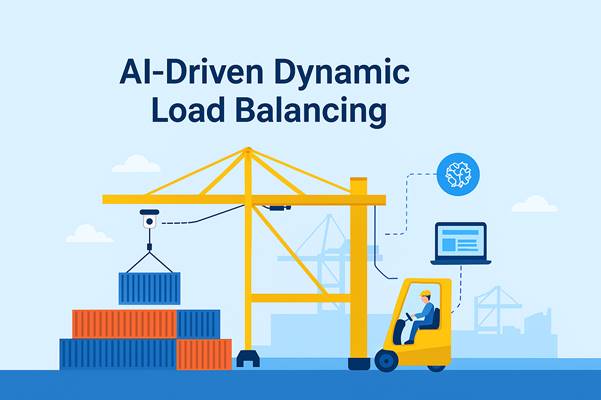
At its core, AI-driven dynamic load balancing is a sophisticated automation solution that enables cranes to continuously analyze, predict, and adjust load distribution in real time. Instead of depending on fixed control logic or the operator’s best guess, the crane becomes a living, learning system that responds instantly to changing conditions.
Think of it as an invisible yet tireless co-operator: every second, thousands of data points flow from sensors into an AI engine. This engine applies predictive analytics to anticipate imbalance and vibration before they occur. In contrast, traditional systems rely on preset parameters or manual oversight, which inevitably introduces delays and errors.
The difference is profound: where an operator might take seconds to react, AI responds in milliseconds, ensuring unmatched stability and efficiency.
This advanced system operates within a closed-loop feedback cycle so fast that it is almost imperceptible to the human eye:
A dense network of strain gauges, accelerometers, and gyroscopic sensors monitors every micro-movement—load weight, crane speed, tilt angle, and even ambient conditions such as wind speed and temperature.
The incoming data stream is processed by machine-learning models trained on years of operational history. Beyond spotting current imbalances, the AI predicts oscillation patterns seconds before they manifest.
Controllers transmit precise signals to the motors and braking system. The crane reacts smoothly, often correcting issues before the operator even notices a problem.
This seamless interaction allows operations to proceed at maximum efficiency, even in challenging environments where human reaction time might fall short.
The system's structure is a tight integration of hardware and software components that work together seamlessly to create an intelligent operational network.
These are the "senses" of the system, including strain gauge sensors to measure precise weight, accelerometer sensors to detect the slightest vibrations and oscillations, and temperature sensors to monitor the condition of mechanical parts. These sensors are strategically placed on the main girder, cables, and drive systems, collecting data at an extremely high frequency. This data is transmitted to the central processing unit, creating a large data stream (Big Data) for the AI to analyze.
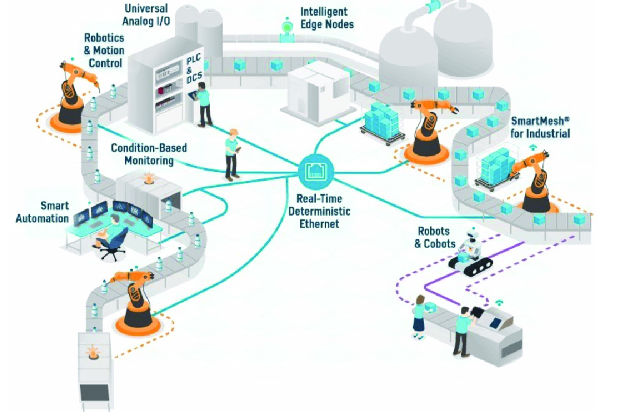
This is the brain of the entire system. The AI receives the massive data flow from the sensors, using machine learning and deep learning models not only to detect current issues but also to learn from historical data to improve its predictive capabilities. The system can self-adjust and optimize its algorithms after each operational cycle, making its reactions increasingly accurate and fast.
Based on the AI's analysis, the controller translates complex decisions into specific control commands for the motors and movement mechanisms. This controller can adjust the speed precisely, braking force, and trajectory of the hook, ensuring the load is evenly distributed and counteracting oscillations as soon as they begin.
Implementing this technology brings significant benefits, not only solving current problems but also creating a long-term competitive advantage.
By eliminating oscillations and unnecessary movements, the system significantly shortens the lifting cycle time. This can increase productivity by up to 15-20%, allowing more goods to be moved in the same amount of time.
Energy wasted on oscillations and inefficient adjustments is minimized, leading to 10-20% savings in electricity consumption compared to traditional systems.
The system reduces wear and tear on crucial components like cables, bearings, and gearboxes. When combined with predictive maintenance, AI analyzes wear trends and automatically recommends optimal maintenance schedules, saving businesses up to 30-40% on unnecessary maintenance costs and avoiding unexpected breakdowns.
The AI can provide early warnings of a risk of tipping, tilting, or cable failure, preventing serious accidents. This not only minimizes property damage but also protects the lives of workers.
In windy conditions or when lifting awkwardly shaped materials, the system maintains high stability, reducing risks for both the operator and the goods.
Reducing oscillations and shock loads helps the crane's steel structure last longer, extending the equipment's lifespan.
Instead of rigid periodic maintenance, the AI analyzes the real-time condition of each component to suggest the most appropriate time for servicing, extending equipment lifespan while ensuring safety.
This technology is no longer just a theory; it has been successfully applied in many fields and is opening up numerous future possibilities.
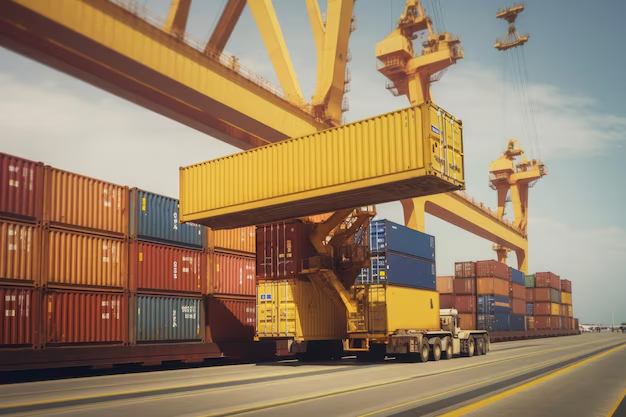
The technology helps reduce impacts when loading and unloading containers, increasing handling speed and limiting cargo damage. This is especially important in high-intensity environments that demand continuous performance.
When transporting extremely heavy materials in high-temperature environments, the AI maintains load balance and reduces vibrations, ensuring 24/7 continuous operation.
In strong winds or when installing ultra-heavy equipment at great heights, the technology ensures absolute precision and safety, reducing risk for the entire project.
The combination of AI and IoT creates an intelligent management ecosystem. Data from sensors is pushed to a cloud platform, allowing managers to remotely monitor the equipment's status via a dashboard on a phone or computer. This helps them make timely decisions and optimize overall management. Predictive Maintenance uses AI to analyze wear trends of each component, automatically suggesting optimal maintenance schedules, enabling companies to be more proactive in maintenance and avoid sudden failures.
Although the cost of installing the sensor system and AI software can be high, companies should view this as a long-term investment, offset by energy savings and reduced maintenance costs.
Operators and maintenance personnel need to be retrained to work with the new system. Companies should partner with solution providers to organize specialized training programs.
Many older cranes can still be upgraded through retrofit solutions, allowing companies to leverage existing systems without a full replacement.
The global market for smart crane solutions is undergoing a rapid expansion. Independent research firms forecast double-digit annual growth, driven by macro trends that include stricter safety regulations, rising labor costs, and a worldwide push for carbon reduction.
Asia-Pacific: As a global manufacturing and trade hub, this region is seeing mega-ports in China, Singapore, and especially Vietnam, investing heavily in AI-powered cranes. This is not just to handle enormous cargo volumes, but also to enhance unloading speed and precision in high-density port environments, helping these economies maintain their competitive edge.
Europe: The EU's Green Deal is a powerful catalyst, accelerating the adoption of energy-efficient lifting solutions. European companies are seeking technology that helps reduce carbon footprints and optimize energy efficiency, two factors that AI-Driven Dynamic Load Balancing excels at.
North America: Demand here is focused on sectors that require absolute precision and safety. Offshore wind projects require cranes to lift enormous turbines in challenging, often windy, marine environments. Similarly, advanced manufacturing industries like automotive and aerospace need highly precise, automated material handling technology to maintain product quality.
Financial modeling shows that AI-Driven Dynamic Load Balancing typically achieves a payback period in under three years, even for mid-sized facilities. Beyond direct savings from energy and maintenance, companies also reap invaluable indirect benefits: higher customer satisfaction due to faster service, reduced insurance costs and claims from less damage, and improved ESG (Environmental, Social, and Governance) scores, all of which strengthen long-term competitiveness.
Deploying AI-Driven Dynamic Load Balancing is a phased process designed to minimize risk and maximize learning. This roadmap ensures a smooth and strategic transition for your business.
The first step is building a solid business case. Conduct a detailed analysis of your current crane utilization, energy costs, and maintenance history. This helps you identify pain points and accurately calculate the potential ROI, creating a strong foundation for investment.
To validate effectiveness, equip a limited number of cranes with sensors and AI modules. This phase allows you to collect baseline data and validate the technology's performance in your specific operational environment. The results from the pilot will serve as convincing evidence for a broader rollout.
This is a critical step to ensure a successful transition. Train your operating crew on how to use the new AI dashboards, emphasizing a collaborative human-machine interaction. The goal is to help employees understand that the AI acts as an intelligent "co-pilot," enabling them to work more efficiently and safely, rather than replacing them.
After a successful pilot, expand the installation across the entire crane fleet. At the same time, the predictive maintenance system will be integrated into the company's existing management systems, like ERP (Enterprise Resource Planning) or CMMS (Computerized Maintenance Management System), to automate maintenance scheduling.
The optimization process doesn't stop once the deployment is complete. The AI system will continue to collect and analyze new operational data to fine-tune its algorithms, ensuring continuous performance gains over time. By following this roadmap, companies can transition from a single proof-of-concept crane to a fully intelligent lifting fleet with minimal operational disruption.
AI-Driven Dynamic Load Balancing is far more than just a new technology; it represents a strategic turning point for every industry where precision and safety in lifting are mission-critical. The adoption of this solution marks a decisive shift from reactive to proactive operations, where foresight, continuous monitoring, and real-time control become the daily norm rather than the exception.
By fusing artificial intelligence, advanced sensor arrays, and IoT connectivity into a single, responsive ecosystem, businesses can create supply chains that are not only more resilient and efficient but also inherently sustainable. This intelligent synergy enables cranes and other lifting equipment to anticipate challenges, adapt instantly to dynamic conditions, and optimize performance around the clock, regardless of environmental complexity or workload fluctuations.
Investing in this technology is therefore much more than a capital expense; it is a long-term commitment to operational excellence and an unmistakable declaration of forward-thinking leadership. Companies that embrace AI-Driven Dynamic Load Balancing demonstrate to customers, partners, and regulators alike that they are prepared to lead their industries into a smarter, safer, and stronger future—one defined by reliability, energy efficiency, and uncompromising safety standards.
Add: Crane Park, Xinxiang City, Henan Province, China
CEO. MENG QI HAN: Tel: +86-373-5288220
Email: txlet@hotmail.com
Henan office - China: Crane Park, Xinxiang City, Henan Province, China
Import and Export Manager Asia: Ms. Any Tam
Email: txlet@hotmail.com / Mobile: (+84)983 848 328 / Wechat: tkpanda06 / Zalo: (+84)983 848 328
Hanoi office - Vietnam: No 16, Nhan Hoa Alley, Hai Boi Street, Vinh Thanh Commune, Hanoi City, Vietnam
© 2009-2025 by TXLET